

John O. Ifediora
President, Council on African Security And Development.
It usually takes an event or a combination of seemingly unrelated developments to refocus the senses. For decades Africans, specifically since the conclusion of the second World War, have lumbered aimlessly from the stranglehold of colonial imperialism to misinformed post-independence development strategies. Experiments with democracy failed because the framers failed to grasp the essential ingredients of democratic form of governance. Autocratic single-party rule and military dictatorship usurped and mismanaged economic resources while destroying social institutions necessary to promote sustainable development. The cumulative effects of these self-inflicted injuries have now laid bare the continent’s irresponsible behavior, and the gross apathy of the governed. The catalytic events that sent shock waves across the continent and forced an over-due self-reevaluation by African leaders and the masses alike are the recent actions taken by the Trump administration … .elimination of aid to Africa and imposition of travel bans to most African countries to the United States. Both actions are good for Africans.
Since 1945 African countries have received over 1.5 trillion dollars in financial aid, grants, loans, loan-forgiveness, technical assistance, scholarships for African students, and infrastructure development assistance. This is far more than Europe received from the United States under the Marshall Plan to help Europeans rebuild their economies in the aftermath of the second World War. Europeans made good use of the assistance received. In contrast African leaders cannot give account of what they did with the massive and generous financial aid they received from foreign donors; their respective economies remain rudimentary, and all social and economic institutions essential for development retrogressed to stages of redundancy. The absence of effective use of Africa’s native resources, and mismanagement of foreign aid explain the collective status of the continent … .lack of employment, bad educational institutions, decrepit and dysfunctional healthcare system, deplorable transport systems, and bad governance. These explain why young Africans would rather leave their homelands to seek better opportunities elsewhere than stay shackled to a vicious cycle of poverty, miseducation, disease and premature death. This should no longer be the case.
Africans have for long suffered incredible humbling experiences at the hands of their foreign hosts and, to a large extent, debilitating humiliations in foreign countries that have grown tired of perennially giving out handouts to African immigrants fleeing sectarian hostilities, joblessness and poverty at home. The shot across the bowl by the Trump administration is the first salvo in the war against African migrants; other countries are bound to follow suit. This is good development for Africa and Africans because it would compel a self-correction mode and force Africans to take stock of their abilities and the abundant resources at their disposal and dedicate their effort to develop their respective economies. It takes pride, self-awareness, respect for one’s humanity and disrespect by others to wake up dormant native instincts of self-preservation. Africans have reached that imaginary line of introspection and homeward bound determination.
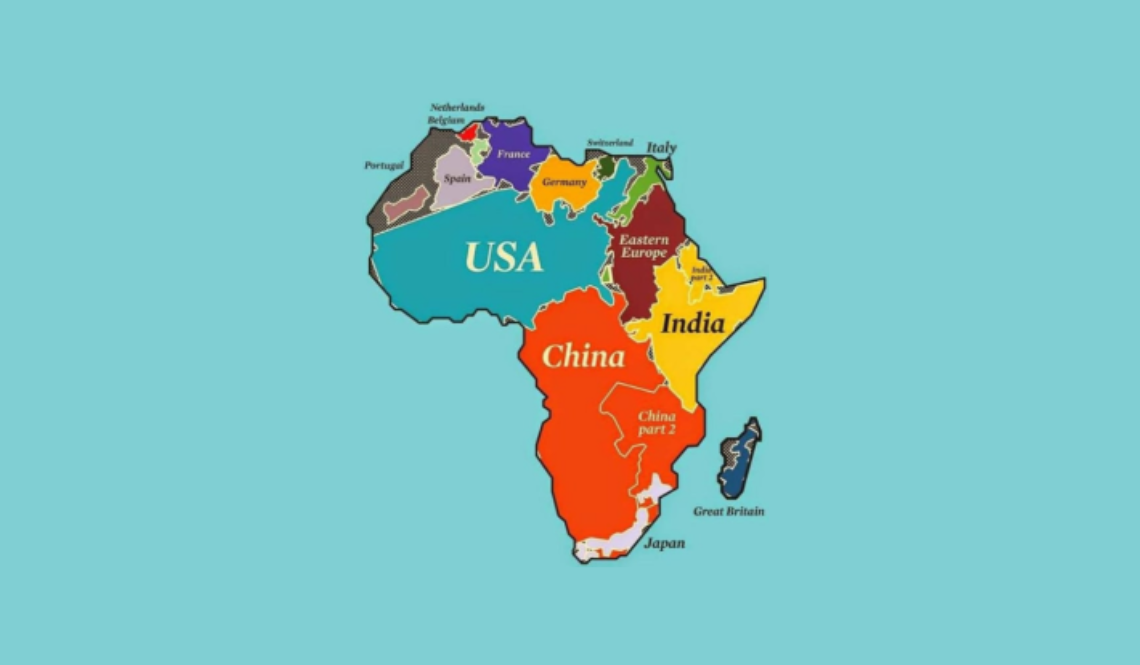
Africa, with good leadership and dedicated effort, can self-sustain. It does not need foreign financial aid to build its respective economies, it can generate enough revenue to begin its collective journey to industrialization, it has a young and talented labor force to drive productivity, and with a landmass of over 30.3 million square miles it can fit the US, China, India and most of Europe within its geo-physical competence. It is a mighty continent that its inhabitants have taken for granted for too long.
The first step in Africa’s revival is to insist that its leaders stop accepting new loans and financial aid from foreign nations. Aid and grants only beget perpetual dependency, this must stop. There are proven means to raise needed capital to finance infrastructure development (to be discussed in a later writing). Electing young, educated and proven leaders to forge sustainable Africa-centric development strategies is not a difficult proposition since Africa has an abundant supply of talents at home and in the diaspora. Strengthen and re-create law enforcement agencies to restrain corruption that leaks away needed economic resources (make the penalty upon conviction a life imprisonment or the death sentence to discourage mismanagement of public resources. China is a good example). Then implement sectorial tariffs to initially develop and protect young industries before exposing them to market competition (Britain, France, Japan, China, and the US all used tariffs to protect their infant industries from destructive competition before their respective industries are ready). If African leaders take up this challenge, albeit a difficult one at the onset, young Africans will not want to leave their continent. They would have a continent that affords them a living wage and a home to be proud of.
*A more formal and analytical discuss of this topic is contained in a book titled “Nigeria’s Quarrels With Economics and Good Governance.” http://www.ifediorabooks.com