

CASADE Position Papers On Nigeria’s 2027 Presidential Election
A Nation at the Crossroads
Nigeria stands, once again, at a pivotal moment in its history. The 2027 presidential election is not merely another exercise in democratic ritual — it is a defining referendum on the future of Africa’s most populous nation and its largest economy. With over 220 million citizens, vast natural resources, and immeasurable human potential, Nigeria possesses every ingredient for greatness. What has consistently eluded her is not capacity, but calibre of leadership. The time has come for Nigerians to demand, and to elect, a president endowed with a clear, informed, and executable vision for national transformation.
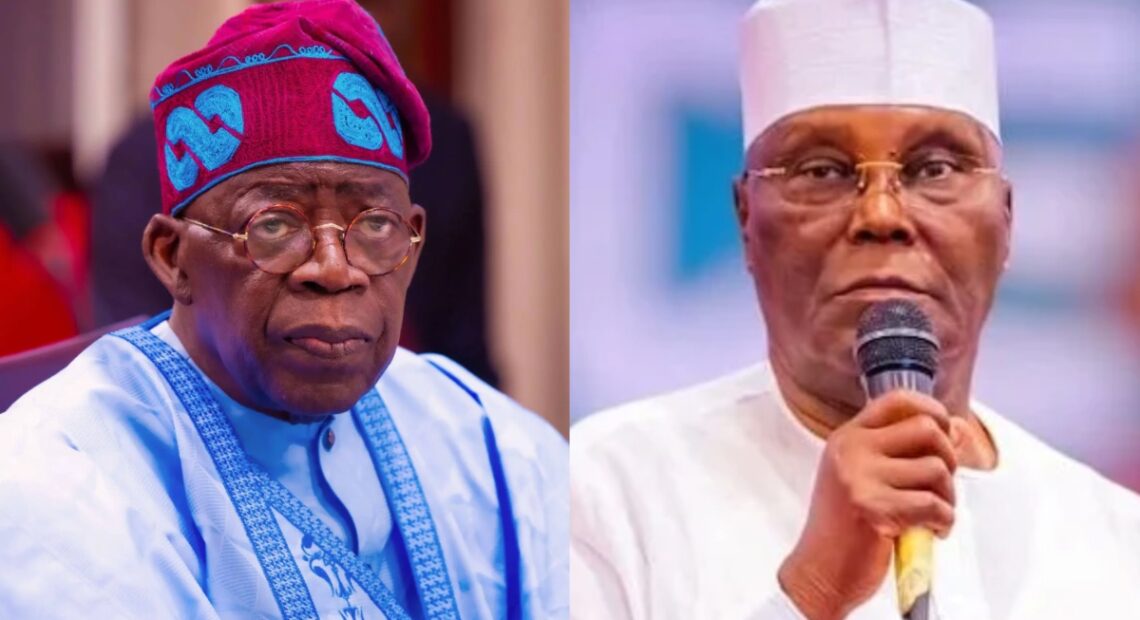
Central to this demand is the uncomfortable but necessary recognition that two of the most prominent figures likely to dominate Nigeria’s political discourse ahead of 2027 — the incumbent President Bola Ahmed Tinubu, who may seek re-election, and former Vice President Atiku Abubakar, who is reportedly poised to make yet another presidential bid — represent precisely the kind of leadership Nigeria must decisively reject. Their records, their controversies, and the structural limitations of their candidacies make a compelling case that Nigeria’s salvation lies elsewhere.
The Cost of Directionless Governance
History is an unforgiving teacher. Decades of leadership characterised by vagueness, improvisation, and the pursuit of power for its own sake have exacted an enormous toll on the Nigerian people. The consequences are not abstract — they are visible in the millions of Nigerians living in multidimensional poverty, in the deteriorating infrastructure that strangles commerce, in the educational institutions haemorrhaging talent to foreign shores, and in a security architecture that has failed to protect citizens from insurgency, banditry, and communal violence.
A leader without vision does not merely fail to move a nation forward — he actively moves it backward. In the absence of a coherent policy framework, governance defaults to crisis management: reactive, inconsistent, and ultimately futile. Nigeria cannot afford another four — or eight — years of such drift. The stakes are simply too high.
What Vision Truly Means
It is necessary to be precise about what is meant by *vision*, lest the word be reduced to mere campaign rhetoric. A leader with clear and informed vision possesses three essential qualities:
First, a rigorous diagnosis of national challenges. A visionary president must understand, with intellectual honesty and empirical grounding, the structural causes of Nigeria’s dysfunction — not merely their symptoms. This demands familiarity with macroeconomic policy, fiscal federalism, agricultural reform, energy economics, security architecture, and the complex interplay between ethnicity, religion, and governance. Sloganeering is not a substitute for this understanding.
Second,, a coherent and deliverable policy agenda. Vision without a plan is fantasy. Nigeria requires a president who arrives in Aso Rock not merely with aspirations, but with sequenced, costed, and institutionally grounded reform programmes — a roadmap that extends beyond the next election cycle and is insulated, as far as possible, from political expediency.
Third, the institutional credibility and personal integrity to execute.** Ideas, however brilliant, are inert without the will and capacity to implement them. A visionary leader must command the trust of the citizenry, the respect of the international community, and the technical expertise — whether personal or advisory — to translate policy into practice.
It is against these three criteria that both Tinubu and Atiku must be honestly measured — and by which both are found profoundly wanting.
The Case Against Tinubu: A Presidency in Crisis
President Bola Ahmed Tinubu assumed office in May 2023 on the promise of bold reform and national renewal. Two years into his administration, the evidence of failure is overwhelming — not merely in the metrics of economic performance, but in the moral credibility that visionary leadership demands.
An Economy in Freefall. When Tinubu assumed office, Nigeria’s total public debt stood at approximately ₦49 trillion. Within two years, that figure had skyrocketed to ₦144 trillion — a 150 per cent increase — with further foreign loans being sought that could push the debt to ₦183 trillion. Simultaneously, inflation ravaged household incomes; food inflation reached 23.51 per cent in early 2025, with food prices having surged nearly 97 per cent since the removal of fuel subsidies. The minimum wage was nominally raised to ₦70,000, yet its real purchasing value is estimated to be equivalent to barely ₦10,000 in 2011 terms, whilst the average monthly cost of living for a family of four — excluding rent — stands at ₦150,000. The arithmetic of this disparity is a humanitarian indictment.
The Security Catastrophe. Under Tinubu’s watch, the kidnap-for-ransom economy has exploded with appalling brazenness. In January 2024, 287 schoolchildren were abducted in Kaduna State in an incident that triggered international outrage, yet the children were reportedly freed only after the payment of a substantial ransom. Communities across the country have resorted to raising funds to arm vigilante groups or to pay protection fees to bandits. This is not governance — it is an abdication of the state’s most fundamental obligation to its citizens.
Integrity Deficits That Cannot Be Ignored. A leader seeking to guide a nation must first be accountable to truth. President Tinubu has been dogged, throughout his political career, by allegations that strike at the very foundations of his personal integrity. Court documents released by a United States District Court in Illinois confirmed that Tinubu was implicated in drug trafficking and money laundering proceedings in 1993, with prosecutors extracting a forfeiture settlement from accounts linked to him. Additionally, he has faced persistent allegations of certificate forgery and age falsification — accusations that resulted in formal lawsuits and remain unresolved to the satisfaction of a significant proportion of Nigerians. So serious was the reputational damage from these controversies that his administration reportedly paid US lobbying firms approximately $2.7 million to help manage the perception of his integrity before foreign governments. That a sitting Nigerian president must spend public-adjacent resources repairing his international image from corruption and criminal allegations is, itself, an extraordinary commentary on the quality of leadership Nigeria has accepted.
Governance Without Empathy. Beyond the numbers, Tinubu’s administration has been criticised for a tone-deafness that transforms already difficult economic circumstances into political catastrophe. The administration’s policy missteps, combined with what many observers have characterised as weak institutional coordination, have turned a difficult economic environment into what one detailed assessment described as a full-scale national disaster and the collapse of the social contract between government and citizen. Nigeria cannot afford a second term of a presidency defined by this record.
The Case Against Atiku: The Perennial Candidate Nigeria Has Outgrown
If Tinubu represents the failure of an incumbent, Atiku Abubakar represents something equally disqualifying: the exhaustion of a political ambition that has long outlasted its democratic justification. Atiku has sought the Nigerian presidency six times — in 1993, 2007, 2011, 2015, 2019, and 2023 — failing on every occasion. A seventh attempt in 2027 would make him, by some distance, the most persistent and most unsuccessful presidential aspirant in Nigerian democratic history. He would be approximately 80 years of age at the time of the election.
The Lesson He Has Refused to Learn. Commentators have noted, with considerable justification, that Atiku appears to have absorbed nothing from the repeated failure of his presidential bids. Nigeria’s political landscape has not changed in ways that would make his seventh attempt meaningfully different from his previous six. The candid assessment offered by informed Nigerian political analysts is stark: Atiku is politically naïve and appears to lack the self-awareness that genuine leadership demands. A man who has sought the highest office in the land seven times without success — and who, rather than reflecting on why the electorate has repeatedly declined to endorse him, simply returns to the arena — is not demonstrating resilience. He is demonstrating an alarming disconnect between personal ambition and public mandate.
The Cloud of Corruption Allegations.** Atiku, like his principal rival, carries a record that falls gravely short of the integrity standard that Nigeria’s 2027 moment demands. A 2010 report by the US Senate Permanent Sub-Committee on Investigations documented how over $40 million in suspect funds was transferred from offshore accounts to United States accounts allegedly linked to him and his wife during his tenure as Vice President — funds that a US Senator described as originating from bribes. A 2020 report by the International Consortium of Investigative Journalists referenced Atiku and his wife in connection with money laundering cases of significant scale. These are not allegations that can be dismissed simply as politically motivated — they are the documented findings of foreign legislative and journalistic institutions of considerable standing. For a man who presents himself as Nigeria’s anti-corruption alternative, the contradiction is disqualifying.
A Pattern of Episodic Engagement. Perhaps most telling of all is what Atiku does between elections. Critics have observed, with justified scepticism, that he appears during electoral seasons to contest the presidency and withdraws — frequently to his base in Dubai — after losing. This is not the pattern of a man consumed by patriotic duty. It is the pattern of someone whose relationship with Nigeria is principally defined by the pursuit of its highest office, not by sustained, year-round engagement with its challenges and its people. Nigeria does not need a president whose connection to the country is seasonal.
The Age Question. While leadership ability is not determined solely by age, and while this essay does not suggest that experience is without value, it is nonetheless a legitimate democratic question whether a man of nearly 80 years — contesting for the most demanding executive office in Africa’s most complex country — possesses the physical and cognitive stamina that the 2027 moment demands. Nigeria is a young nation, with a median age of approximately 18. Its next president should be someone who can not only understand the aspirations of its youth but sustain the relentless pace of governance that those aspirations require.
The Economic Imperative
Nigeria’s economy demands urgent, informed stewardship. The naira’s prolonged instability, the suffocating burden of subsidy removal without commensurate social protection, the collapse of manufacturing competitiveness, and the dangerous over-reliance on oil revenues have combined to produce an economic crisis felt acutely by ordinary Nigerians. Inflation has ravaged household incomes; unemployment, particularly among youth, has become a driver of both despair and insecurity.
An informed leader understands that economic revival is not achieved through populist declarations, but through disciplined monetary policy coordination, strategic industrialisation, investment in agriculture and technology, and the creation of an enabling environment for both domestic and foreign investment. Nigeria’s economic salvation will not come from one man’s proclamation — it will come from one man’s policy, sustained over time and anchored in evidence. Neither the incumbent who has presided over a 150 per cent increase in national debt, nor the perennial aspirant whose economic credentials are clouded by allegations of illicit enrichment, meets this standard.
Security, Sovereignty, and Social Cohesion
No vision for Nigeria can be credible that does not confront the security crisis with both boldness and nuance. The Boko Haram insurgency, the activities of armed bandits in the North-West, the herder-farmer conflicts spreading across the Middle Belt, and the secessionist tensions in the South-East are not isolated phenomena — they are symptoms of a deeper crisis of governance legitimacy and social contract.
A visionary president must pursue a security strategy that is simultaneously firm and just: one that invests in the intelligence capacity and operational effectiveness of the security forces, whilst also addressing the underlying conditions — poverty, marginalisation, and impunity — that allow extremism and criminality to recruit. Brute force alone has never pacified a grievance; only a leader wise enough to know this distinction will succeed where others have repeatedly failed.
The Youth Dividend — Or Time Bomb
Nigeria is, demographically, an extraordinarily young nation. The median age is approximately 18 years. This is either the country’s greatest asset or its most dangerous liability, depending entirely on the choices made in the years immediately ahead. Millions of young Nigerians are educated, ambitious, and increasingly connected to global opportunities — yet find themselves stranded by a domestic economy that offers them neither employment nor hope.
The *japa* phenomenon — the mass emigration of Nigeria’s brightest minds — is not a personal failing of those who leave. It is an institutional indictment of a system that has consistently failed to create conditions worthy of their talents. A visionary president will understand that reversing this trend requires not appeals to patriotism, but the creation of genuine economic opportunity: a functioning power grid, broadband infrastructure, access to credit, and a regulatory environment that rewards enterprise rather than punishing it.
Neither Tinubu nor Atiku — figures whose political identities were formed in a prior century and whose governance philosophies have not demonstrably evolved to meet the demands of a new one — is equipped to speak authentically to this generation or to govern in its interests.
The Democratic Obligation
Beyond policy, there is a deeper argument for visionary leadership rooted in the very nature of democracy itself. When citizens cast their votes, they are not merely choosing a personality — they are conferring a mandate, an authority, and a responsibility. They deserve a president who has earned that mandate through the clarity of his convictions, the coherence of his programme, and the demonstrated seriousness of his preparation for office.
To elect a leader based on ethnic calculation, financial inducement, or the mere familiarity of a name is to betray the democratic covenant. It is to reduce the most powerful act of citizenship to an empty gesture. Nigerians — particularly the young, who will bear the longest consequences of this choice — must hold candidates to a higher standard. They must demand policy debates, not rallies. They must scrutinise manifestos, not slogans. They must ask, with rigour: What is your vision, how will you achieve it, and what is your evidence that it will work? When that question is applied honestly to Tinubu and to Atiku, the answer — in both cases — is deeply inadequate.
A Call to Collective Discernment
The responsibility does not rest with voters alone. Civil society, the media, the academic community, and indeed the international community all have roles to play in raising the quality of Nigeria’s democratic discourse ahead of 2027. Candidates must be subjected to sustained, substantive scrutiny. Promises must be costed and challenged. Vague assurances must be refused the credibility they have too often been granted in the past.
Nigeria has, within her borders, the intellectual capital, the entrepreneurial energy, and the cultural vitality to become the nation she has always promised to be. What she requires is leadership equal to that potential — leadership that sees the country not merely as it is, but as it could be, and possesses the knowledge, the will, and the institutional acumen to close that distance. That leadership is not to be found in the recycled ambitions of yesterday’s political class.
The Election That Cannot Be Wasted
The 2027 presidential election may well be the most consequential in Nigeria’s post-independence history. The challenges are severe, the window for meaningful reform is narrowing, and the patience of a long-suffering citizenry is not inexhaustible. Nigeria cannot afford, once more, to elect a president defined by whom he knows rather than what he knows — by the breadth of his political alliances rather than the depth of his national vision.
President Tinubu’s first two years have demonstrated with painful clarity the cost of electing a man whose integrity was disputed before he assumed office and whose administration has deepened, rather than alleviated, the nation’s economic and security crises. Atiku Abubakar’s seven-decade political career — punctuated by six failed presidential bids, persistent corruption allegations, and a pattern of engagement with Nigeria that is activated primarily by electoral ambition — offers no credible alternative.
Nigeria deserves better than a choice between a failed incumbent and a perennial aspirant. The hour demands a new generation of leadership: younger in outlook if not necessarily in age, untainted by the scandals that have shadowed both men, armed with an informed and credible vision for national transformation, and possessed of the moral authority to ask the Nigerian people to follow. Let 2027 be the year Nigeria finally chose wisely. Let it be the year the electorate refused the familiar and demanded the extraordinary. The nation’s future — and the futures of the 220 million people who call it home — depends on nothing less.
—–