Abstract.
Bureaucratic corruption constitutes one of the most persistent and debilitating impediments to economic development on the African continent. This paper examines the multidimensional consequences of bureaucratic corruption across African economies, drawing on empirical data from the African Union, UNCTAD, Transparency International, the African Development Bank, Chatham House, and peer-reviewed scholarship. Following a continental analysis, the paper provides five extended national case studies — Nigeria, Cameroon, Kenya, Zaire (the Democratic Republic of the Congo under Mobutu Sese Seko), and South Africa — that collectively illuminate corruption’s consequences across diverse political systems, resource endowments, and historical contexts. Each case study examines landmark corruption incidents, traces their economic and social effects, and evaluates reform trajectories. The evidence demonstrates that corruption reduces continental GDP growth by approximately two to four percentage points annually and drains an estimated US$88.6 billion in illicit capital flight each year. At the national level: Nigeria has more than half its population in poverty despite vast oil wealth; Cameroon’s forty-three-year-old patronage state has left 40 percent of its citizens below the poverty line; Kenya’s recurring procurement and debt scandals have driven public debt to over US$80 billion; Zaire under Mobutu provides history’s most extreme archetype of corruption as state policy; and South Africa’s ‘state capture’ under Jacob Zuma cost an estimated R1.5 trillion, reversing a generation of post-apartheid economic gains. The paper concludes that durable reform requires political will, independent institutions, civil society empowerment, and international cooperation to close the financial havens that receive and protect stolen African wealth.
Keywords: bureaucratic corruption, African economies, Nigeria, Cameroon, Kenya, Zaire, Mobutu, South Africa, state capture, illicit financial flows, governance reform, poverty
1. Introduction
The African continent possesses extraordinary endowments of natural resources, demographic vitality, and cultural capital. Yet, for decades, the promise of these assets has been systematically undermined by a corrosive institutional pathology: bureaucratic corruption. Defined as the abuse of entrusted public power for private gain within governmental and administrative structures, this form of corruption encompasses everything from petty bribery at the point of service delivery to grand-scale embezzlement and the total capture of state institutions by private interests (Transparency International, 2024).
According to the African Union, the continent loses approximately US$50 billion annually to government and corporate fraud in the form of illicit financial flows (African Development Bank, 2023). UNCTAD’s landmark 2020 report placed this figure at US$88.6 billion per year — equivalent to 3.7 percent of continental gross domestic product — a sum nearly equal to the combined inflows of official development assistance and foreign direct investment (UNCTAD, 2020). These figures, stark as they are, likely understate the true magnitude of the problem.
This paper is structured in two principal parts. The first provides a continent-wide analysis of corruption’s economic consequences across five interconnected domains: macroeconomic growth suppression, the deterrence of foreign direct investment, the degradation of public services and human capital, the amplification of inequality and poverty, and the facilitation of illicit financial flows. The second part presents five national case studies — Nigeria, Cameroon, Kenya, Zaire, and South Africa — which collectively demonstrate how these continental dynamics manifest across diverse national contexts, political systems, and historical trajectories.
2. Theoretical Framework
Two principal theoretical frameworks inform the analysis. The ‘helping hand’ hypothesis suggests that in environments characterized by excessive bureaucratic regulation, bribery may serve as an efficiency-enhancing mechanism. Some empirical support exists: a study of Ghana found a positive long-run symmetric correlation between corruption and economic development in certain model specifications, though the short-run effect was consistently negative (Discover Sustainability, 2024). However, the dominant and empirically robust framework is the ‘grabbing hand’ hypothesis, holding that corruption functions as a predatory tax that distorts resource allocation, deters investment, and retards growth. Research across 34 African countries between 2005 and 2019 confirms that the grabbing hand effect is pervasive across all governance dimensions (International Economic Policy, 2024). This paper aligns with the dominant empirical consensus.
3. Continental Analysis: Macroeconomic and Fiscal Consequences
The African Union estimates that corruption reduces annual GDP growth across the continent by approximately two to four percentage points (African Union, 2022). This penalty, compounded over time, represents an extraordinary forfeiture of developmental potential. The mechanism operates through multiple channels simultaneously: the distortion of public expenditure away from productivity-enhancing investments; the inflation of transaction costs for businesses; and the systematic narrowing of the fiscal base through tax evasion and customs fraud. Government and corporate fraud contribute US$50 billion and US$80 billion annually respectively to illicit financial flows, representing approximately 3.7 percent of Africa’s GDP and exceeding the continent’s total annual official development assistance (African Development Bank, 2023).
The deterrence of foreign direct investment is equally significant. FDI represents an average of approximately 39 percent of African external finance composition (UNCTAD, 2018), and corruption erodes it by creating institutional unpredictability, raising transaction costs, and undermining rule of law. Current relevant research confirms the pervasive ‘grabbing hand effect’ across all African institutional governance dimensions (International Economic Policy, 2024). From 2000 to 2015, total illicit capital flight from Africa amounted to US$836 billion — exceeding Africa’s total external debt stock of US$770 billion in 2018, paradoxically making Africa a net creditor to the world (UNCTAD, 2020). IFFs related to extractive commodity exports alone amounted to US$40 billion in 2015 (UNCTAD, 2020).
The human cost is equally severe. In African countries with high illicit financial flows, governments spend 25 percent less on health and 58 percent less on education than countries with low illicit flows (UNCTAD, 2020). Research confirms that poor individuals — who are captive to public services they cannot privately substitute — are 2.5 times more likely than wealthy citizens to be victims of bureaucratic extortion (Justesen and Bjornskov, 2014). Countries with higher levels of executive, legislative, and judicial corruption are associated with higher levels of hunger (Njangang, Asongu, and Mouchili, 2024).
4. Nigeria: Oil Wealth and the Poverty of Governance
4.1 Structural Context
Nigeria — Africa’s most populous nation and its largest economy by GDP — presents the most consequential and extensively documented case of bureaucratic corruption on the continent. Since independence in 1960, the country has faced ongoing instances of major corruption encompassing political favouritism and the misappropriation of public funds that have continuously eroded the legitimacy of governmental institutions (Seahipublications, 2025). In 2024, Nigeria ranked 140th out of 180 countries on the Corruption Perceptions Index, with a score of only 26 out of 100 — a marginal improvement from 25 in 2023 but near the bottom of the global distribution (Transparency International, 2025). Nigeria’s historical average CPI score since 1996 stands at just 21.48 points, with a record low of 6.90 in 1996; for three successive years in 2001, 2002, and 2003, Transparency International ranked Nigeria as the second most corrupt country in the world (SAGE Journals, 2015).
Corruption continues to be a defining feature of Nigeria’s governance, public administration and political life, hindering its full potential and global standing (Ifediora, 2019). While Nigeria has the fourth largest economy on the African continent by GDP, its GDP per capita — a more accurate measure of prosperity — is among the lowest in Africa. More than half of all Nigerians — approximately 54 percent — live in poverty (Chatham House, 2025). Corruption diverts public resources away from vital sectors such as education, healthcare, and infrastructure, fuelling poverty and inequality. In October and December 2024, approximately 25.1 million Nigerians were facing acute food insecurity, with the World Food Programme warning this figure could escalate to 33 million in 2025 (Chatham House, 2025).
4.2 The Abacha Kleptocracy
The most emblematic case of grand-scale state corruption in Nigeria is the regime of General Sani Abacha, who ruled from November 1993 until his sudden death in June 1998. Transparency International describes Abacha’s theft as among the largest by a head of state in world history. During his five-year rule, Abacha and his associates siphoned an estimated US$5 billion or more from the Nigerian state by exploiting his unchecked control over the Central Bank of Nigeria and oil revenues, channelling funds through a network of offshore shell companies across Switzerland, Luxembourg, Liechtenstein, and the United Kingdom (Historical Nigeria, 2025). He and his National Security Adviser ordered the Central Bank to release hundreds of millions of dollars at a time, ostensibly for ‘security votes’ — a budgetary category exempt from normal audit scrutiny.
The recovery of Abacha’s stolen assets has consumed the energies of successive Nigerian governments and international legal teams for over a quarter century. As of 2022, confirmed recoveries totaled approximately US$3.65 billion, drawn from Switzerland (over US$1.2 billion in multiple tranches), the United States (over US$334.7 million), Liechtenstein (US$227 million), Jersey (US$300 million), and France (including US$150 million repatriated in 2023) (This Day Live, 2022; The Nation, 2023). The Abacha case has driven significant global reforms in anti-money laundering standards, including the Financial Action Task Force’s strengthened protocols and the UN Convention Against Corruption of 2003. Nevertheless, the case also exposed the complicity of international financial institutions in receiving and concealing stolen African wealth.
4.3 The Diezani Alison-Madueke Petroleum Ministry Scandal
The corruption associated with Diezani Alison-Madueke’s tenure as Nigeria’s Minister of Petroleum Resources from 2010 to 2015 represents the pathology of civilian-era bureaucratic corruption at its most internationally ramified. The UK trial, which commenced in January 2026 at Southwark Crown Court in London, concerns six counts of bribery and conspiracy to commit bribery, alleging that she accepted £100,000 in cash, designer goods from Harrods, luxury UK property use, chauffeur-driven cars, private jet flights, and private school fees in return for steering multi-million pound oil and gas contracts to favoured businessmen (The Africa Report, 2026). The prosecution emerged from a decade-long investigation by the National Crime Agency’s International Corruption Unit.
In parallel US Department of Justice civil forfeiture actions, two Nigerian businessmen were alleged to have paid bribes to secure oil contracts whose proceeds — totaling more than US$100 million — were laundered through the US luxury real estate market and used to purchase a 65-metre superyacht (US DOJ, 2023). The Central Bank Governor at the time publicly alleged that approximately US$20 billion was missing from NNPC accounts under her oversight — allegations for which he was dismissed by the President (Wikipedia, Diezani, 2025). The EFCC boss has acknowledged that no level of enforcement capacity could enable recovery of even half of what has been stolen from Nigeria, because foreign jurisdictions holding stolen assets are resistant to full cooperation (Premium Times, 2025).
4.4 Systemic Oil Sector Fraud and Public Administration
Nigeria’s oil sector has been characterised by what the EFCC chairman described as ‘massive fraud’ that is structural rather than episodic. A 2014 audit report indicted NNPC for alleged failure to remit over N3.23 trillion in domestic crude oil revenues (Ripples Nigeria, 2022). The Annual Reports of the Auditor General of the Federation for successive years have identified NNPC and the Central Bank of Nigeria as the two most consistently queried organs of government, with those queries routinely going unanswered without presidential intervention to enforce accountability (AllAfrica, 2025). Bureaucratic corruption severely affects the efficiency and effectiveness of public service delivery, leading to widespread public discontent and reduced governmental legitimacy (Ibrahim, 2023). UNICEF reported that 64 percent of Nigerian children lacked access to childhood education — a deficit attributable in significant part to the diversion of education budgets through corrupt procurement and ghost teacher payrolls.
Chatham House’s assessment of twenty-five years of anti-corruption reform in Nigeria is sobering: efforts to tackle corruption since the end of military rule in the late 1990s have yielded uneven results, having been hindered by politicisation, weak institutions, and double standards among leaders (Chatham House, 2025). Many Nigerians feel resigned, sensing that corruption is the price for getting things done. In 2024, Nigerians took to the streets again in widespread protests against poor governance and corruption — demonstrations that underscored the crisis of legitimacy for Nigerian public institutions.
5. Cameroon: Patronage Politics and Institutionalised Corruption
5.1 Structural Context
Cameroon presents a vivid illustration of how the fusion of authoritarian longevity with bureaucratic corruption can hollow out a nation’s developmental potential across generations. President Paul Biya has held power since 1982 — more than four decades — making his administration one of the world’s longest-running, and, in the assessment of anti-corruption analysts, among its most institutionally corrupt. David Wallechinsky ranked Biya among the world’s most corrupt dictators, alongside Robert Mugabe and Teodoro Obiang Nguema Mbasogo (CASADE, Corruption in Cameroon, 2026).
The foundation of Biya’s political economy is an elaborate patronage system. A recent study found that Biya installed 1,536 senior members of the political administration, 94 percent of whom are members of his own Cameroon People’s Democratic Movement party (CASADE, 2025). Appointments, promotions, and resource distribution depend on political loyalty rather than merit. The country’s public administration functions not as a vehicle for service delivery but as a tool for political preservation — a dynamic that systematically subordinates administrative efficiency and integrity to regime survival. State institutions are highly politicized, bureaucratic inertia prevails, and selective justice is common (BTI, 2026).
The perennial challenges of systemic corruption, service delivery failure, poverty, and slow growth persist. In a World Bank 2024 report, approximately 40 percent of Cameroonians live below the poverty line. Urban unemployment runs at 35 percent and many educated youths face challenges in obtaining formal employment. A 2024 Afrobarometer survey found that 51 percent of young Cameroonians had considered emigrating — a damning metric of institutional failure (The Conversation, 2025). Today, the average Cameroonian is no more wealthy than in 1986 — a lost generation of growth directly attributable in significant part to the diversion of public resources through corrupt channels.
5.2 Landmark Corruption Incidents
In 2023 alone, Cameroon’s own National Anti-Corruption Commission (CONAC) reported that the country lost approximately FCFA 114 billion (approximately US$188.6 million) to corruption — and this figure represents only documented cases that reached the attention of a government body whose independence is itself questioned (Africa Is a Country, 2025). The true scale of diversion is widely believed to be considerably larger. One emblematic incident from the 1994 World Cup illustrates both the scale and the impunity of Cameroon’s corruption: citizens contributed FCFA 1 billion to fund the national team’s participation, but the funds disappeared. The minister responsible stated in a television interview that ‘the money went missing in the air somewhere between Paris and New York’ — and faced no consequences whatsoever (Africa Is a Country, 2025).
In 2023, former Defence Minister Edgar Alain Mebe Ngo’o was sentenced to 30 years in prison for embezzlement — a significant conviction in a country where trials have frequently stalled. However, despite this prosecution, many other trials have stalled and Cameroon continues to top corruption watchdog lists. Notably, despite an ongoing related trial in the United Kingdom, no prosecution has been brought against Cameroonian officials in the context of the Glencore scandal — a multinational commodities trading case in which Cameroon is one of several African countries implicated (BTI, 2026). President Biya himself has never fulfilled Article 66 of the 1996 Constitution by declaring his own assets and sources of income — a constitutional requirement that has been disregarded for over forty years, under the helpless gaze of Cameroonians (CASADE, Corruption in Cameroon, 2026).
5.3 Economic and Developmental Consequences
The economic consequences of Cameroon’s institutionalized corruption are inseparable from its political structure. Despite possessing significant oil reserves, agricultural wealth, and mineral resources, Cameroon has repeatedly been compelled to turn to Bretton Woods institutions for budget support — much of the money obtained is assumed by analysts to end up in the private bank accounts of top government officials (Africa Is a Country, 2025). The country’s infrastructure deficit is acute, and the diversion of development funds into patronage networks has meant that Cameroon’s economic diversification potential has remained chronically unrealised. The ongoing Anglophone crisis — a political conflict rooted in part in grievances about marginalisation and government neglect of the Northwest and Southwest regions — has resulted in numerous deaths and the internal displacement of well over 300,000 people, this has precipitated severe disruption of local economies and widespread food insecurity (Responsible Statecraft, 2025).
Cameroon ranked 140th out of 180 countries on the 2023 Corruption Perceptions Index, a position it shared with Nigeria — a juxtaposition that underscores the breadth of the governance failure across the continent’s most populous francophone and anglophone nations respectively (BMZ, n.d.). The political stagnation under Biya has produced what the Bertelsmann Transformation Index has characterised as a near-total failure of the conditions necessary for sustainable development: autocratic governance has prevented both political and economic reform, leaving the country trapped in developmental stasis (BTI, 2026).
6. Kenya: A Democracy Undermined by Serial Procurement Corruption
6.1 Structural Context
Kenya presents a distinctive variant of the African corruption problem: a country with formally democratic institutions, a relatively diversified economy, and an internationally respected legal profession, yet one whose governance has been chronically penetrated by serial procurement corruption and grand-scale financial scandal across successive administrations. The pattern — scandal, investigation, political protection of perpetrators, impunity — has repeated itself with such regularity across decades and governments that it has been described by anti-corruption campaigners as a systemic rather than episodic feature of the Kenyan state (Nation Africa, 2024).
Kenya loses close to half of its domestic revenue to illicit financial flows annually — one of the highest rates on the continent (BusinessDay, 2025). Public debt has reached an alarming US$82 billion, more than double the state budget of 2023, with more than half of government revenue now going towards debt repayments (Transparency International USA, 2025). Youth unemployment reached 67 percent in 2024, and poverty rates hover close to 40 percent — above pre-COVID-19 levels. In the summer of 2024, thousands of Kenyans took to the streets protesting proposed double-digit tax hikes on everyday items such as bread and cooking oil, measures introduced to meet fiscal targets under Kenya’s IMF loan agreements — a direct consequence of the debt crisis generated in part by decades of corruption-driven fiscal mismanagement (Transparency International USA, 2025).
6.2 The Goldenberg Scandal
Kenya’s largest and most consequential historical corruption scandal was the Goldenberg affair, which unfolded during President Daniel Arap Moi’s tenure and constitutes, by some estimates, one of the largest acts of financial fraud in post-independence African history. The scheme involved the government subsidizing fictitious gold and diamond exports through a company called Goldenberg International, owned by businessman Kamlesh Pattni in close association with then-Intelligence chief James Kanyotu. The two were licensed to export gold and diamonds from Kenya but instead collected massively inflated government subsidies for minerals that were never actually exported. A forensic auditor testifying at the subsequent Commission of Inquiry estimated that the country lost up to KSh 100 billion through the scheme — equivalent to approximately 10 percent of Kenya’s GDP at the time of the scandal (Tuko, 2018; Nation Africa, 2024).
The Goldenberg affair was not merely a financial scandal; it represented the capture of regulatory and intelligence apparatus by a patronage network at the highest levels of government. The subsequent WikiLeaks publication of a 2004 investigative ‘Kroll Report’ commissioned by the Kibaki government revealed that more than £1 billion had been transferred out of Kenya by the family and associates of former President Moi during his tenure (CASADE, Corruption in Kenya, 2026). Moi himself, despite later decrying the scale of graft in the country, had presided over one of the most sophisticated political patronage machines on the continent — a machine fed entirely by public resources diverted through corrupt channels.
6.3 The Anglo-Leasing Scandal
The Anglo-Leasing affair — a series of fraudulent government procurement contracts for security-related equipment — represents a second defining chapter of Kenyan bureaucratic corruption, and one that implicated senior figures of the supposedly reform-oriented Kibaki administration. The scandal involved at least 18 high-value government security contracts awarded to fictitious or phantom companies, which were grossly inflated and paid for the non-delivery of goods and services ranging from passport printing systems to naval ships and forensic laboratories (HapaKenya, 2025). Anglo-Leasing Finance was paid approximately US$33 million to supply a high-technology passport system, while the same work was originally quoted by a French firm at 6 million euros — with the contract awarded at 30 million euros after suppressing competitive tendering entirely (CASADE, Anglo-Leasing, 2026).
The scandal’s exposure by whistle-blower John Githongo had significant international repercussions: the World Bank suspended five projects worth a total of US$265 million because of corruption, the IMF postponed tranches of a Poverty Reduction and Growth Facility loan worth US$73 million, and the Netherlands suspended aid to Kenya worth US$146 million — all in direct response to the Kibaki government’s failure to act credibly against the implicated officials (Bachelard, 2010). The scandal illustrated a pattern that would recur throughout Kenyan governance: the use of government procurement as a vehicle for systematic looting, protected by political networks that neutralize accountability institutions.
6.4 The National Youth Service and Eurobond Scandals
The pattern of procurement fraud continued through subsequent administrations. The National Youth Service became the site of two major corruption scandals under the Kenyatta administration: in 2015, approximately KSh 791 million was allegedly stolen through fictitious contracts implicating senior officials; and in 2018, KSh 9 billion (approximately US$90 million) was allegedly siphoned through fraudulent procurement deals — the largest theft in the program’s history (Nation Africa, 2024; Ifediora, NYS, 2026). Despite numerous investigations and court proceedings, convictions have been rare and the perpetrators of the larger scandals have largely escaped meaningful accountability.
The Eurobond scandal of 2014 — in which KSh 215 billion reportedly could not be accounted for from a US$2.75 billion foreign loan raised for infrastructure development — led to a sovereign credit rating downgrade and intensified the public perception of governance as a mechanism for elite enrichment rather than national development (Corruption.co.ke, n.d.; The Conversation, 2024). Kenya’s external debt has grown sharply over the last decade to 70 percent of GDP in 2023, with persistent government deficits and public interest payments consuming nearly 30 percent of government revenues (Credendo, 2025). The debt burden now forces the Kenyan government to impose painful tax increases on its citizens to meet obligations incurred in part through corrupt mismanagement — making ordinary Kenyans the ultimate bearers of the cost of elite theft.
7. Zaire: The Archetype of Kleptocracy
7.1 Mobutu and the Invention of State Theft
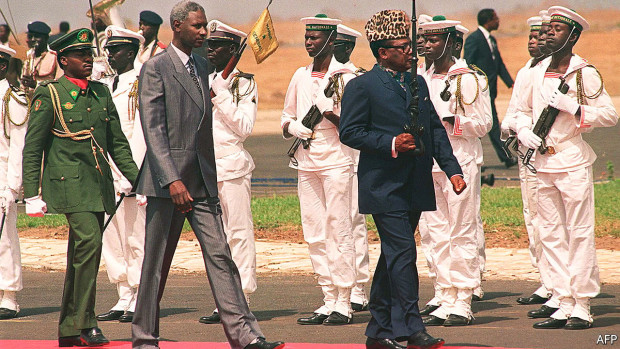
No study of African bureaucratic corruption can be considered complete without examining Zaire under Mobutu Sese Seko — a case so extreme in its systematic nature and so catastrophic in its consequences that it gave rise to the very term ‘kleptocracy’: government by theft. Mobutu ruled the country he renamed from the Democratic Republic of the Congo to Zaire from 1965 until his forced departure in 1997 — a thirty-two-year period during which he transformed a resource-rich nation into one of the world’s most comprehensively looted states. His personal worth was once estimated as high as US$8 billion to US$10 billion, accumulated through what scholars have described as a carefully and thoughtfully refined system for transforming the public resources of Zaïre into private wealth (ResearchGate, 1993).
The consequences of Mobutu’s system were well known and precisely documented: the immiseration of the people; the destruction of the nation’s infrastructure; the enrichment of Mobutu and his collaborators; and the transformation of Zaire into a staging ground for foreign intervention against neighbouring African nations (ScienceOpen, 1993). In some years, Mobutu and his cronies siphoned off up to 50 percent of Zaire’s capital budget, as well as hundreds of millions in mineral export revenues, foreign aid, loans, and private investment — some of it guaranteed by the United States Export-Import Bank (FPIF, 2013). The effects were catastrophic: extensive corruption crippled public services from road maintenance to schools and hospitals; civil servants, their salaries stolen, were forced into the corruption system just to survive; nurses demanded payment before giving injections; soldiers and police routinely extorted bribes from passersby (FPIF, 2013).
7.2 The Mechanisms of State Capture
Mobutu’s kleptocracy was institutionally sophisticated in a way that distinguished it from mere opportunistic corruption. It constituted a comprehensive system of state capture in which every instrumentality of government — the military, the bureaucracy, the judicial system, the central bank, the state-owned enterprises — was repurposed as a mechanism for extracting rents for Mobutu and his political network. A relative of Mobutu’s once explained the mechanism of revenue collection with stark simplicity: ‘Mobutu would ask one of us to go to the bank and take out a million.’ (CASADE, Corruption in DRC, 2026). This was not a metaphor but a description of how the state’s financial apparatus actually functioned.
The theft of metal from the state-owned Gecamines metallurgical works in the copper and cobalt-rich Katanga region was so pervasive that the company called in the Zairian army to guard its warehouse — only for the thefts to increase, as the soldiers simply joined in the looting (Seattle Times, 1997). Cobalt and copper that should have been generating state revenues to fund public services was instead loaded onto pickup trucks by military personnel and sold for personal profit. This example captures the essence of Mobutu’s system: the systematic privatization of state assets for the benefit of the regime’s clients, while the population was reduced to destitution.
Mobutu is widely assumed by Western diplomats to have stolen billions of dollars of Western aid, reducing this minerals-blessed country to such a pathetic state that even his own unpaid army did not defend him when rebels advanced to depose him in 1997 (CS Monitor, 1997). The economic deterioration was such that civil servants struggling to survive on near-worthless salaries were forced into extortion and bribery simply to feed their families — creating a cascading, self-reinforcing system in which corruption at the top generated corruption throughout the entire administrative structure, penetrating to the lowest level of bureaucratic interaction with the public.
7.3 Economic Consequences and Enduring Legacy
The economic consequences of Mobutu’s kleptocracy were devastating and long-lasting. A country with abundant copper, cobalt, diamonds, gold, coltan, and other mineral resources — one of the wealthiest resource endowments on the African continent — was reduced to a state of infrastructural collapse, monetary hyperinflation, and institutional nullification. The cobalt and copper industries that should have generated sustained development revenues were systematically run down by a combination of deliberate mismanagement, systematic theft, and neglect, ensuring that the wealth of the subsoil flowed through Mobutu’s private networks rather than through the state treasury to public services.
The enduring legacy of Mobutu’s kleptocracy has shaped the trajectory of the Democratic Republic of the Congo — as Zaire was renamed following his overthrow — for decades after his death. The institutional destruction he wrought proved far easier to accomplish than to repair. The normative corruption of public administration that his system produced created a culture of corruption so thoroughly embedded in official practice that it has resisted the efforts of successive governments and international development actors to dislodge it. The DRC has remained among the world’s poorest countries by per capita income despite its extraordinary resource wealth — a paradox whose roots lie directly in the institutional devastation of the Mobutu era. DRC ranks among the most corrupt countries in the world on the Corruption Perceptions Index to this day, a testament to the durability of the institutional damage inflicted by three decades of kleptocratic governance.
8. South Africa: State Capture and the Subversion of Democracy
8.1 The Post-Apartheid Institutional Framework and Its Vulnerabilities
South Africa presents perhaps the most analytically complex case among the five countries examined in this paper. Unlike the other case studies, South Africa entered the post-apartheid democratic era in 1994 with a relatively sophisticated institutional framework, a functioning judicial system, an independent central bank, and a free press — institutional endowments that distinguish it from the other countries in this study. Yet, over the subsequent three decades, and with particular severity during the presidency of Jacob Zuma from 2009 to 2018, this institutional framework was systematically subverted by what scholars and official commissions have termed ‘state capture’ — the use of private interests to redirect state resources and decision-making for personal enrichment.
State capture in South Africa has been estimated by the government itself to have cost the country up to R250 billion (approximately US$17 billion) between 2014 and 2017 alone, and to have reduced the country’s GDP growth rate by an estimated 4 percent per year (CASADE, Corruption in South Africa, 2026). Daily Maverick’s analysis estimated the cost of state capture across the second Zuma administration at approximately R1.5 trillion — just short of the entire national budget for 2019, or about a third of South Africa’s GDP, effectively wiping out four months of all labour and productivity of all South Africans (Daily Maverick, 2019). The Journal of Democracy placed plausible estimates of the direct cost of state capture during Zuma’s second term at more than US$100 billion, or about four months’ worth of South Africa’s estimated 2018 GDP (Journal of Democracy, 2024). Former South African Treasury official Ismail Momoniat stated that state capture during the Zuma administration caused such severe damage to the economy that it effectively reversed all the efforts of the Mandela and Mbeki administrations to develop the country’s economy.
8.2 The Gupta Family and the Architecture of State Capture
The most notorious manifestation of South Africa’s state capture was the relationship between President Jacob Zuma and the Gupta family — a wealthy Indian immigrant family whose extraordinary penetration of government decision-making across cabinet appointments, state-owned enterprises, procurement contracts, and media represented a new and sophisticated form of corruption: not merely the diversion of individual transactions but the systematic restructuring of institutional power to serve private interests. The Public Protector’s 2016 report, titled State of Capture, documented in 355 pages how the Gupta family had inserted themselves into a position where they could effectively offer Cabinet positions, direct the appointment of executives at state-owned enterprises, and influence the running of government (Quartz Africa, 2016).
The modus operandi, as former Deputy Finance Minister Mcebisi Jonas subsequently explained, was straightforward: ‘You remove management, and put in compliant management. You remove boards, and put in boards that are compliant. The rest is very easy.’ (CASADE, Zondo Commission, 2026). This template was applied across a wide range of institutions including cabinet ministries, law enforcement agencies, the national revenue service, and the boards of state-owned enterprises. The Gupta family had already made 6 billion rand in dealings with the government and wanted 2 billion rand more — a brazenness that reflects the degree to which they had come to regard the state as their personal commercial vehicle (Quartz Africa, 2016).
When Finance Minister Nhlanhla Nene was fired by Zuma in December 2015 for refusing to approve a R1.6-trillion nuclear deal with Russia that would have benefited Gupta-connected companies, the financial markets reacted instantly: R378 billion was wiped off the Johannesburg Stock Exchange within days, South Africa was downgraded to ‘junk status’ by Fitch and Standard & Poor’s, and the rand lost significant value — an immediate and quantifiable demonstration of how corrupt political decisions translate into direct economic loss for millions of citizens (Daily Maverick, 2019). Foreign direct investment collapsed from US$4.5 billion in 2012 to US$1.3 billion in 2017, a decline attributable in significant part to the institutional uncertainty generated by state capture (Daily Maverick, 2019).
8.3 Eskom, Infrastructure Corruption, and Load-Shedding
Particularly dire repercussions flowed from the corruption surrounding Eskom, South Africa’s state-owned electricity utility, which became the centrepiece of several overlapping corruption scandals involving coal supply contracts, power-plant construction, and the appointment of compliant management to facilitate irregular procurement. Mismanagement driven by corruption led to chronic shortfalls in generating capacity, and Eskom was forced to resort to rolling blackouts — ‘load-shedding’ — which became a defining feature of daily life in South Africa from 2014 onwards. The South African central bank noted that by 2019 the country had less generating capacity than it did ten years earlier, despite massive public investment in the intervening period — investment that had been absorbed by corruption rather than generating electricity (Journal of Democracy, 2024).
The load-shedding crisis imposed a direct tax on every sector of the South African economy — from manufacturing and agriculture to retail, services, and small business — adding diesel costs, lost productivity, damaged equipment, and foregone output to the structural damage already inflicted by institutional uncertainty and credit rating downgrades. The South African central bank estimated that sustained load-shedding cost the country approximately 1 percentage point in forgone economic growth per year, even before considering longer-term investment effects (Journal of Democracy, 2024). This is corruption’s economic cost made physically visible: in the darkness that fell across South African homes and businesses, night after night, for years.
8.4 The Zondo Commission and Reform
The Zondo Commission of Inquiry into State Capture, established in 2018, produced a five-part report completed in June 2022 after four years of testimony from more than 300 witnesses, including the former president himself. The Commission’s reports ran to thousands of pages and provided compelling evidence of the systemic nature of state capture across multiple institutions, recommending prosecution of numerous individuals. The Commission cost the state close to R1 billion — far more than any prior South African judicial inquiry (CASADE, Zondo Commission, 2026). However, by 2025, numerous commentators and political parties had questioned the lack of action in implementing the commission’s findings, with prosecutions proceeding far more slowly than the scale and documentation of the wrongdoing would warrant.
South Africa’s 2024 CPI score of 41 marks a decline from its peak of 45 in 2016 and reflects stagnation in the fight against corruption (CASADE, Corruption in South Africa, 2026). A 2024 Afrobarometer survey showed that corruption has significantly contributed to a large drop in public support for democracy in South Africa — a profoundly troubling finding in a country whose democratic institutions once stood as a model for the continent. The failure to reduce corruption has weakened the rule of law and undermined public trust in critical institutions, and the perception that corruption is entrenched without consequence has fostered a culture of impunity (CASADE, Corruption in South Africa, 2026). The gap between the volume of documented evidence produced by the Zondo Commission and the pace of accountability represents a test of South Africa’s institutional integrity whose outcome remains uncertain.
9. Comparative Analysis: Common Patterns and Divergent Trajectories
Examining these five cases in parallel reveals both structural commonalities and significant divergences in the dynamics and consequences of bureaucratic corruption. Several recurring patterns emerge. First, all five cases demonstrate the role of natural resource wealth as a corruption amplifier: Nigeria’s oil, Cameroon’s oil and agricultural wealth, Kenya’s land and mineral resources, Zaire’s extraordinary mineral endowment, and South Africa’s gold, platinum, and coal have all served as magnets for corrupt extraction, generating the ‘resource curse’ dynamic in which abundance generates competition for control of rents rather than investment in productive diversification.
Second, all five cases illustrate the centrality of elite impunity in perpetuating corruption cycles. In Nigeria, the EFCC chairman acknowledges that stolen wealth cannot be fully recovered because foreign jurisdictions protect it. In Cameroon, President Biya has never declared his assets as constitutionally required. In Kenya, the perpetrators of the NYS and Eurobond scandals largely escaped meaningful accountability. In Zaire, Mobutu was never held accountable during his lifetime, and his surviving associates retained much of their ill-gotten wealth. In South Africa, the Zondo Commission’s comprehensive evidence base has not generated proportionate prosecutorial action. The common thread is the political protection of corrupt elites by the systems they have captured.
Third, all five cases demonstrate the international dimension of corruption: stolen African wealth does not remain in Africa. It flows through Swiss banks, London luxury property markets, New York real estate, offshore shell companies in Jersey and Liechtenstein, and financial systems across the United States and Europe. Mobutu’s billions, Abacha’s billions, Alison-Madueke’s proceeds, and the beneficiaries of Kenyan procurement fraud all relied on the willingness of Western financial systems to receive and protect their wealth. This represents a fundamental global accountability failure that reform efforts focused exclusively on African governance cannot address.
The cases also demonstrate divergent trajectories. South Africa retains institutional resources — an independent judiciary, a free press, a civil society sector, a functional parliament, and opposition parties with genuine power — that give its reform efforts a credibility and durability unavailable in the Cameroonian or Zairean contexts. Kenya’s democratic institutions, while imperfect, have generated accountability moments that Cameroon’s autocracy has systematically prevented. Nigeria’s EFCC, for all its limitations, has achieved asset recovery and prosecutorial outcomes that Mobutu’s Zaire never contemplated. These divergences suggest that institutional quality is a critical determinant of the capacity for reform, and that anti-corruption efforts must be calibrated to the specific institutional contexts in which they operate.
10. Reform Efforts and Policy Implications
10.1 Continental Frameworks
At the continental level, the African Union’s Ten-Year Strategy 2024-2033 focuses on economic governance and the fight against corruption, complemented by a 2025-2026 Action Plan for Anti-Money Laundering and Combating Illicit Financial Flows (African Development Bank, 2025). The African Development Bank has partnered with Interpol to combat financial crime and has integrated governance and corruption risk assessment mechanisms into its lending operations. Reform successes — Seychelles (+20 CPI points since 2012), Cote d’Ivoire (+10 points since 2019), and Tanzania (+10 points since 2014) — demonstrate that change is possible under the right conditions: legislative reform, independent enforcement, credible prosecution, and sustained political will (Transparency International, 2025).
10.2 Country-Level Reform Imperatives
For Nigeria, the Petroleum Industry Act’s conversion of NNPC to a limited liability company represents a potentially significant structural reform, but its impact on actual corruption within the sector remains to be demonstrated. The country’s recent removal from the FATF grey list is a necessary but insufficient condition for the institutional transformation that meaningful corruption reduction requires. For Cameroon, the minimal institutional path forward is enforcement of the constitutional requirement that senior officials — including the President — declare their assets; beyond this, the removal of political patronage as the sole basis for administrative appointment is a prerequisite for any meaningful bureaucratic reform. For Kenya, transparent public debt accounting, independent procurement oversight, and genuine accountability for the perpetrators of documented scandals are foundational requirements. For the DRC — as Zaire is now known — rebuilding the institutional capacity that Mobutu systematically destroyed requires sustained international engagement and the full deployment of the resource revenues that should rightfully fund public services. For South Africa, full implementation of the Zondo Commission’s recommendations, including credible prosecution of implicated individuals, is essential to demonstrate that accountability mechanisms function and to begin restoring the institutional legitimacy that state capture has eroded.
10.3 International Obligations
Across all five cases, the international dimension of the problem demands commensurate international responses. Western governments and financial institutions that receive, manage, and protect the proceeds of African corruption bear moral and legal responsibility for the consequences of that complicity. The Abacha case required decades of international legal action to recover a fraction of the stolen wealth. The Diezani trial is being conducted in London, not Lagos. The proceeds of Kenyan procurement fraud were laundered through Swiss and British offshore accounts. Meaningful reform requires that the international financial system cease to function as a permissive environment for the concealment of stolen African public funds — a commitment that Western governments have thus far made in principle but not consistently enforced in practice.
11. Conclusion
The five national case studies examined in this paper illuminate, from different angles and in different registers, the same fundamental truth: bureaucratic corruption is not a peripheral or incidental feature of African governance but a systemic condition, deeply embedded in the political economies of states shaped by colonialism, resource dependence, authoritarian legacies, and the permissiveness of the international financial system. Its consequences — in foregone growth, squandered resources, degraded public services, and human suffering — are measurable, severe, and enduring.
Nigeria’s oil wealth has been unable to lift 54 percent of its population from poverty. Cameroon’s citizens are no wealthier than they were forty years ago. Kenya’s public debt forces austerity upon citizens who never benefited from the loans incurred in their name. Zaire’s extraordinary mineral wealth generated not development but destitution, as one man refined for three decades the art of transforming public resources into private wealth. South Africa’s post-apartheid institutional promise was systematically hollowed out by a network that redirected the state’s resources to private benefit, wiping out a third of GDP.
These are not failures of resources, geography, or culture. They are failures of governance — specific, traceable, and in many cases documented in prosecutorial evidence, commission testimony, and audit findings. The challenge is not the absence of knowledge about what has occurred; it is the absence of the political will, institutional integrity, and international cooperation necessary to strengthen accountability and make reform durable. Until that changes, Africa’s extraordinary potential will continue to be consumed by the cancer within.
References
Africa Is a Country. (2025, May). Paul Biya, the last Kaiser. https://africasacountry.com
African Development Bank. (2023). Government and corporate fraud in Africa: Illicit financial flows. African Development Bank Group.
African Development Bank. (2025). 2025 Annual Meetings: Eradicate corruption to make the most of Africa’s capital. https://www.afdb.org
African Union. (2022). Corruption and economic growth in Africa. African Union Commission.
AllAfrica. (2025). NNPCL controversy long foretold. https://allafrica.com
Bachelard, J. Y. (2010). The Anglo-Leasing corruption scandal in Kenya. Review of African Political Economy, 37(124), 187–200.
Bertelsmann Transformation Index (BTI). (2026). Cameroon Country Report: BTI 2026. https://bti-project.org
BMZ / German Federal Ministry for Economic Cooperation and Development. (n.d.). Cameroon: Political situation. https://www.bmz.de
BusinessDay Nigeria. (2025). How illicit financial flows stunt Africa’s growth. https://businessday.ng
BusinessDay Nigeria. (2025). From boardroom to courtroom: Six Nigerian energy ministers arrested. https://businessday.ng
Chatham House. (2025). Corruption in Nigeria. https://www.chathamhouse.org
Chatham House. (2025). Taking action against corruption in Nigeria. https://www.chathamhouse.org
Chatham House. (2026). Tinubu’s UK state visit: Diplomacy alone won’t fix Nigeria’s problems. https://www.chathamhouse.org
Christian Science Monitor. (1997, May 19). Bungle in the Jungle: How Zaire’s Mobutu Failed. https://www.csmonitor.com
Corruption.co.ke. (n.d.). The Eurobond scandal (KSh 215 billion). https://corruption.co.ke
Credendo. (2025, August 12). Kenya: Debt-driven vulnerabilities persist despite short-term liquidity relief. https://credendo.com
D+C Development and Cooperation. (2025). Paul Biya is a time loop that Cameroon can’t seem to escape. https://www.dandc.eu
Daily Maverick. (2019, March 1). State Capture wipes out third of SA’s R4.9-trillion GDP. https://www.dailymaverick.co.za
Discover Sustainability. (2024). Does corruption affect development outcomes differently in sub-Saharan Africa? https://doi.org/10.1007/s43621-024-00314-2
Foreign Policy in Focus (FPIF). (2013). Zaire/Democratic Republic of the Congo. https://fpif.org
HapaKenya. (2025). Here are some of the biggest corruption scandals in Kenya. https://hapakenya.com
Historical Nigeria. (2025). Abacha Loot/Kleptocracy (1993–1998). https://historicalnigeria.com
Humanities and Social Sciences Communications. (2025). The impact of bureaucratic quality on tax revenue collection. https://www.nature.com/articles/s41599-025-05620-2
Ifediora, John. (2019) https://www.researchgate.net/publication/257984163_The_Dutch_Disease_Syndrome_and_Choice_of_Governance_The_Nigerian_Experience
International Economic Policy. (2024). Governance and the relationship between corruption and FDI in Africa. https://doi.org/10.1080/02692171.2024.2382112
Journal of Democracy. (2024). Resisting state capture in South Africa. https://www.journalofdemocracy.org
Justesen, M. K., & Bjornskov, C. (2014). Exploiting the poor: Bureaucratic corruption and poverty in Africa. World Development, 58, 106–115.
Nation Africa. (2024). The price of corruption and Kenya’s checkered history of dubious contracts. https://nation.africa
Nairametrics. (2025). Nigeria moves up in 2024 Corruption Perception Index, ranks 140. https://nairametrics.com
Njangang, H., Asongu, S. A., & Mouchili, E. (2024). Does corruption starve Africa? Journal of Policy Modeling, 46(1), 171–197.
Open Society Foundations. (n.d.). How illicit financial flows drain African economies. https://www.opensocietyfoundations.org
PMC. (2023). Fighting corruption in developing countries to meet the challenge of human capital development. https://pmc.ncbi.nlm.nih.gov
Premium Times. (2025). We’ve uncovered massive fraud in Nigeria’s oil and gas industry – EFCC. https://www.premiumtimesng.com
Premium Times. (2026). EFCC returns N3.9bn stolen funds to NNPC. https://www.premiumtimesng.com
Quartz Africa. (2016). What the ‘State Capture’ report tells us about Zuma, the Guptas, and corruption in South Africa. https://qz.com
ResearchGate / ScienceOpen. (1993). External collusion with kleptocracy: Can Zaïre recapture its stolen wealth? Review of African Political Economy, 20(57).
Responsible Statecraft. (2025). How an aging despot’s grip on power could unravel Central Africa. https://responsiblestatecraft.org
Ripples Nigeria. (2022). Review: Five unresolved scandals in Nigeria’s oil sector. https://www.ripplesnigeria.com
RSIS International. (2025). The political economy of corruption and sustainable development in Nigeria, 2015–2024. https://rsisinternational.org
SAGE Journals / Ijewereme, O. B. (2015). Anatomy of corruption in the Nigerian public sector. SAGE Open. https://journals.sagepub.com
Seattle Times. (1997, May 11). A ‘kleptocracy’ collapses — years of looting by Zaire’s Mobutu coming to an end. https://archive.seattletimes.com
Seahipublications. (2025). The impact of Nigeria’s anti-corruption campaigns. International Journal of Innovative Development and Policy Studies, 13(4).
Spotlight on Corruption. (2026). Alison-Madueke trial is ‘vital sign’ of UK’s role in the fight against corruption. https://www.spotlightcorruption.org
The Africa Report. (2026, January 27). Everything you need to know about Diezani Alison-Madueke’s corruption trial. https://www.theafricareport.com
The Conversation. (2024). Understanding the economic cost of corruption in Kenya. https://theconversation.com
The Conversation. (2025). Paul Biya’s life presidency in Cameroon enters a fragile final phase. https://theconversation.com
The Nation Newspaper Nigeria. (2023). The unending saga of Abacha loot recoveries. https://thenationonlineng.net
This Day Live. (2022). $3.65bn Abacha loot recovered by FG in 24 years. https://www.thisdaylive.com
Transparency International. (2024). 2023 Corruption Perceptions Index: Africa. https://www.transparency.org
Transparency International. (2025). CPI 2024 for sub-Saharan Africa. https://www.transparency.org
Transparency International USA. (2025). Kenya’s debt crisis [Policy brief]. https://us.transparency.org
Tuko.co.ke. (2018). 15 mega corruption scandals in Kenya which have never been resolved. https://www.tuko.co.ke
UNCTAD. (2020). Economic development in Africa report 2020. United Nations Conference on Trade and Development. https://unctad.org
United Nations Africa Renewal. (n.d.). Tackling illicit financial flows to secure Africa’s future. https://africarenewal.un.org
U.S. Department of Justice. (2023). Justice Department recovers over $53M from corruption in the Nigerian oil industry. https://www.justice.gov
World Bank StAR. (n.d.). Sani Abacha / Swiss Mutual Legal Assistance Treaty Case. https://star.worldbank.org
*Photo credit: This is Africa.