CASADE Public Policy Series.
This analysis examines how microfinance functions as a foundational mechanism for enhancing economic stability, individual empowerment, and institutional security within the African context, providing a strategic overview for policymakers and development professionals in 2026.
What is Microfinance? Defining Financial Inclusion in the African Context
Microfinance refers to a comprehensive suite of financial services provided to low-income individuals and small businesses that lack access to conventional banking. It extends beyond microcredit (small loans) to include savings accounts, insurance, and money transfers. In Africa, where it is estimated that over 350 million adults remain “unbanked,” microfinance is a critical instrument for fostering economic participation. The practice represents a paradigm shift from traditional, top-down aid to sustainable, bottom-up financial empowerment, providing individuals with the tools for economic self-determination.
According to What is microfinance?, this is a well-documented area of ongoing research and practical application.
The Core Components: Credit, Savings, and Insurance
- Microcredit: This involves the provision of small-scale loans to capitalize micro-enterprises, which form the backbone of many local economies across Africa. These loans enable entrepreneurs to invest in inventory, equipment, and expansion.
- Micro-savings: Secure savings facilities allow individuals, particularly those in the agricultural sector, to build a financial buffer against seasonal income fluctuations and unforeseen expenses, thereby enhancing household resilience.
- Micro-insurance: This service offers protection against specific risks, such as crop failure, climate-related events, and health emergencies. It provides a crucial safety net that prevents a single shock from pushing a family into destitution.
Barriers to Entry: Why Traditional Banks Often Fail Africa
-
- Lack of Formal Collateral: Many potential borrowers in rural and informal economies lack the land titles or other formal assets required by traditional banks as collateral.
_
-
- Geographical and Infrastructural Barriers: The physical distance to bank branches and limited infrastructure in many rural regions of West and East Africa present significant obstacles to accessing financial services.
_
- Systemic Inequality: Pervasive gender and social inequalities often exclude women and marginalized groups from formal financial systems, despite their critical role in local economies.
The Mechanics of Change: How Microfinance Operates in 2026
Modern microfinance delivery combines established social models with advanced technology to overcome traditional banking barriers. The operational success of these programs relies on innovative collateral systems, efficient disbursement channels, and integrated financial education. This approach ensures that capital is not only distributed but also effectively utilized for sustainable economic growth.
Research published by an African microfinancing model shows that this is a well-documented area of ongoing research and practical application.
The Lifecycle of a Microloan
- Application and Group Vetting: Many Microfinance Institutions (MFIs) utilize a group lending model where applicants form small, self-selecting groups. The collective serves as a form of social collateral, with peer pressure and mutual support ensuring high repayment rates.
- Disbursement and Financial Training: Once approved, funds are disbursed. This is often coupled with mandatory financial literacy training, which equips borrowers with essential skills in bookkeeping, cash flow management, and business planning.
- Collective Repayment Structures: Repayments are typically made in frequent, small installments during regular group meetings. This structure fosters accountability and provides a forum for peer support and problem-solving.
Digital Transformation in Microfinance
- Mobile Technology Proliferation: The increasing smartphone penetration across the continent has enabled the rise of digital wallets and mobile banking platforms, such as M-Pesa, significantly lowering transaction costs and increasing accessibility.
- Biometric Verification: To address the challenge of formal identification, many MFIs are adopting biometric technology (e.g., fingerprint or iris scans) to create unique digital identities for clients, enhancing security and streamlining services.
- Mobile Microfinance is the primary catalyst for expanding financial inclusion in 2026, leveraging digital platforms to deliver services to remote and previously unreachable populations.
Strengthening the Shield: The Link Between Finance and Security
Economic stability is intrinsically linked to regional security. By providing legitimate avenues for economic advancement, microfinance serves as a powerful tool for conflict mitigation and post-conflict reconstruction. It addresses the root causes of instability, such as poverty and unemployment, which can make communities vulnerable to recruitment by extremist groups and criminal networks. Empowering individuals economically strengthens the entire social fabric, fostering resilient communities capable of withstanding external shocks.
Research published by Best practices in African microfinance shows that this is a well-documented area of ongoing research and practical application.
Reducing Illicit Financial Flows and Crime
- Formalizing the Informal Economy: Microfinance helps transition economic activity from the informal to the formal sector, reducing vulnerability to exploitation and illicit financial activities.
- Creating Legitimate Economic Pathways: By funding legitimate enterprises, particularly in border regions, microfinance reduces the appeal of smuggling, trafficking, and other forms of organized crime.
- Enhancing Institutional Stability: A robust microfinance sector contributes to a more stable and predictable economic environment, which is fundamental to preventing state fragility.
Empowering Women as Security Actors
- The Women, Peace, and Security (WPS) Agenda: There is a demonstrable statistical correlation between female financial autonomy and reduced intra-household and community-level conflict.
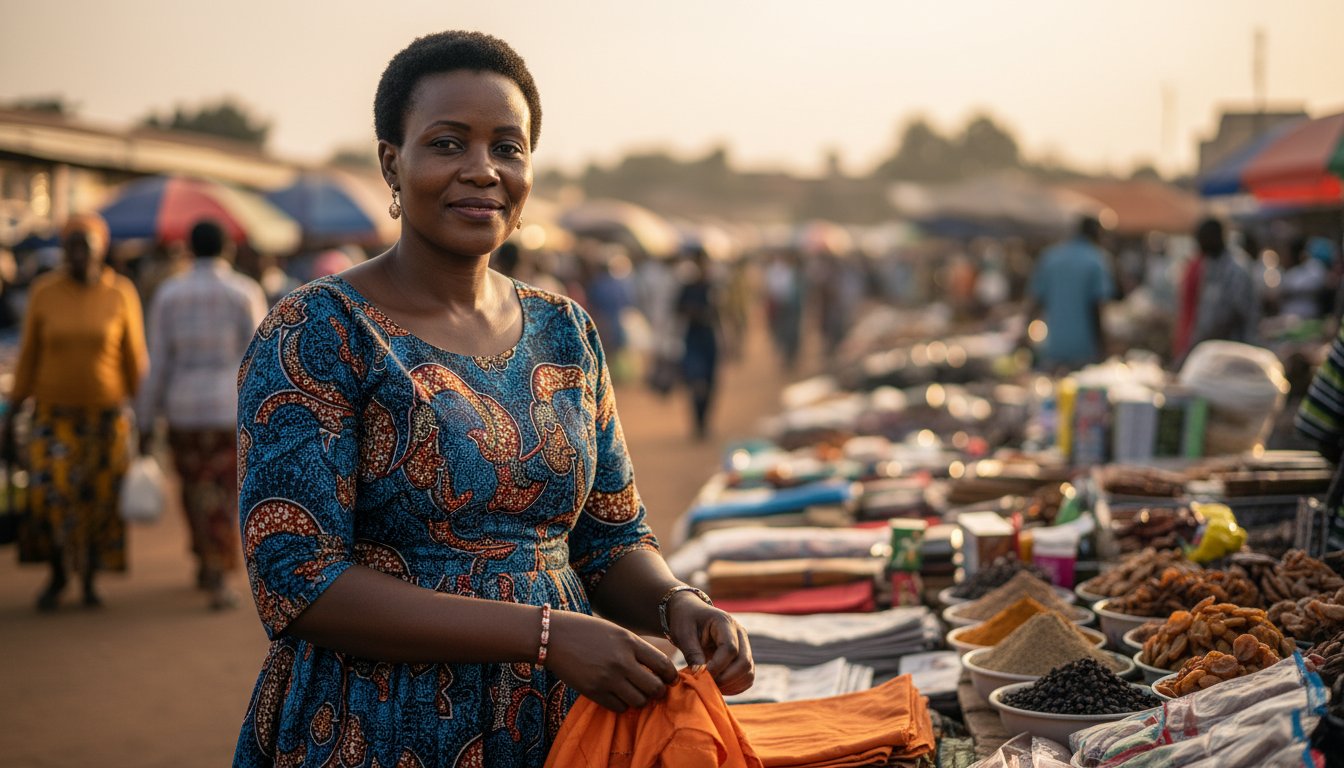
- Case Study: West African Markets: Female entrepreneurs, supported by microfinance, are often central to the stability of local markets, which serve as vital community hubs and indicators of social cohesion.
- The financial inclusion of women is a demonstrated pillar of community stability and security.
Navigating the Ethical Landscape: Integrity and Anti-Corruption
For microfinance to be a credible development tool, it must operate within a transparent and ethical framework. Addressing valid criticisms regarding high interest rates and the risk of over-indebtedness is paramount. This requires robust institutional oversight, clear regulatory standards, and a commitment to borrower protection. CASADE’s work in promoting anti-corruption frameworks is directly applicable to ensuring the integrity of development finance initiatives.
Implementing Accountability Frameworks
- Standardized Reporting for MFIs: Establishing clear, universal standards for financial reporting and social impact measurement is essential for transparency and accountability.
- The Role of Regulatory Bodies: National and regional regulatory bodies, such as those in Nigeria and Kenya, are crucial for licensing MFIs, setting interest rate caps, and enforcing consumer protection laws.
- Borrower Protection Principles: The rights of the borrower must be central, including transparent pricing, fair treatment, and effective mechanisms for recourse and dispute resolution.
The Fight Against Systemic Corruption
- Digital Transaction Audits: The shift to mobile money and digital records creates a transparent audit trail, significantly reducing the potential for fund diversion and “leakage” during loan disbursement.
- Institutional Capacity Building: Training for MFI managers and staff on ethical governance, anti-corruption protocols, and internal controls is critical for building a culture of integrity.
- Transparent Financial Records: Promoting the use of standardized accounting and digital record-keeping enhances the ability of regulators and funders to oversee MFI operations effectively.
The CASADE Vision: Integrating Policy, Research, and Action
The Council on African Security and Development (CASADE) posits that the future of microfinance depends on the rigorous integration of policy, research, and on-the-ground implementation. Effective development strategies cannot be designed in a vacuum; they must be informed by empirical data and adapted to specific local contexts. Our research and high-level convenings aim to bridge the gap between theory and practice, fostering a more secure and prosperous continent.
Evidence-Based Policymaking for Financial Inclusion
- Informing Policy with Data: Data and analysis from the CASADE Journal of African Security can be used to refine lending models and inform national financial inclusion policies.
- Bridging the Research-Implementation Gap: We facilitate dialogue between academics, policymakers, and MFI practitioners to ensure that research findings are translated into effective, actionable programs.
- Promoting Anti-Corruption Frameworks: CASADE encourages African governments and development partners to adopt proven anti-corruption frameworks to safeguard the integrity of microfinance initiatives.
Frequently Asked Questions
- Is microfinance the same as microcredit?
- No. Microcredit specifically refers to the provision of small loans. Microfinance is a broader term that encompasses a range of financial services, including microcredit, savings accounts, insurance, and payment services, designed for low-income populations.
- How does microfinance help reduce poverty in Sub-Saharan Africa?
- Microfinance reduces poverty by providing capital for income-generating activities, enabling asset accumulation through savings, and offering insurance to mitigate financial shocks. This fosters economic resilience and provides a pathway toward sustainable livelihoods.
- What are the main risks associated with microfinance for borrowers?
- The primary risks include over-indebtedness, which can occur if borrowers take on multiple loans they cannot repay, and predatory lending practices by unregulated entities charging excessively high interest rates. Strong regulatory oversight and financial literacy training are key to mitigating these risks.
- Can microfinance really help stop conflict and improve security?
- While not a panacea, microfinance can be an effective component of a broader security strategy. By addressing economic grievances, creating legitimate employment, and empowering women—who are key agents of peace—it helps reduce the underlying drivers of instability and conflict.
- What is the average interest rate for a microloan in Africa?
- Interest rates vary significantly by country, institution, and loan product, but they are generally higher than commercial bank rates to cover the high administrative costs of servicing many small, remote loans. Annual Percentage Rates (APRs) can range from 20% to over 100%. Effective regulation aims to balance MFI sustainability with borrower affordability.
- How can governments prevent corruption in microfinance programs?
- Governments can prevent corruption by establishing strong, independent regulatory bodies, enforcing strict licensing and reporting requirements for MFIs, promoting digital financial services to ensure transparency, and supporting institutional capacity building focused on ethical governance.
- Who is the “father” of modern microfinance?
- Professor Muhammad Yunus, a Bangladeshi economist, is widely regarded as the pioneer of modern microfinance. He founded the Grameen Bank in 1983 on the principle of providing small loans to the impoverished without requiring collateral, earning a Nobel Peace Prize in 2006 for his work.
- How does CASADE support microfinance and development initiatives?
- CASADE supports these initiatives through evidence-based research published in its journal, by facilitating policy dialogue at its international conference, and by developing and promoting institutional anti-corruption frameworks that enhance the transparency and effectiveness of development finance.