

Kenechukwu Obiezu
Introduction
Nigeria’s protracted security crisis has precipitated a severe humanitarian emergency, most visibly manifested in the proliferation of Internally Displaced Persons (IDP) camps across the Federal Capital Territory (FCT). The continued existence and expansion of these camps stand as a sobering testament to the compounding failures of successive governments and the devastating human cost of sustained conflict. This report examines the prevailing conditions within FCT IDP camps, the institutional response to displacement, and the structural reforms required to address this crisis comprehensively.
I. The Security Context and Government Response
The FCT continues to face significant security threats, notwithstanding official assertions to the contrary. On 5 March 2026, approximately nineteen persons were abducted in Peze, Kubwa — a suburb of the capital — before being rescued by security agencies following four days in captivity. Despite this incident, FCT Minister Nyesom Wike publicly maintained that the security situation within the territory remains under control.
This position is difficult to reconcile with prevailing realities. The FCT shares extensive boundaries with Niger State to the west and northwest, and Kaduna State to the northeast — two regions where terrorist and bandit activity continues to inflict severe humanitarian harm. The capital’s relative stability owes largely to the disproportionate concentration of security resources therein, and should not be mistaken for a resolution of the broader national security crisis.
2. Profile and Origins of Displaced Persons
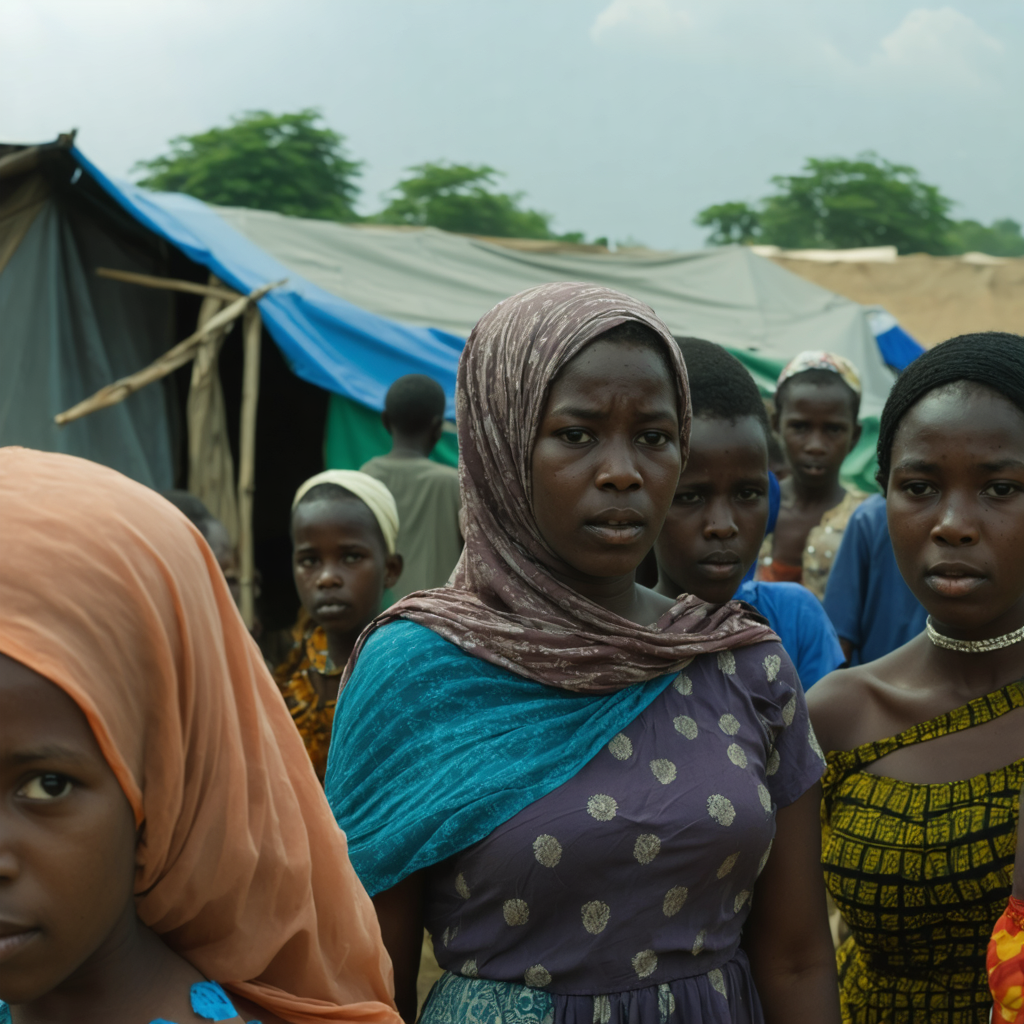
The FCT currently hosts approximately eighteen IDP camps, of which five constitute the principal settlements: Durumi, New Kuchingoro, Wassa, Lugbe, and Kuje. These camps collectively shelter in excess of twenty thousand displaced persons originating from Borno, Adamawa, Yobe, Kaduna, Plateau, Nasarawa, Katsina, Bauchi, Zamfara, and Sokoto states. The majority of these individuals were displaced by jihadist insurgency in Nigeria’s northeast and northwest regions. Many arrived with neither material possessions nor institutional support, having been forcibly uprooted from ancestral lands and livelihoods.
3. Humanitarian Conditions
3.1 Shelter and Sanitation
Living conditions across the major IDP settlements are uniformly poor. Makeshift structures provide inadequate shelter, particularly during adverse weather. Open sewage systems create persistent public health hazards, and access to safe Water, Sanitation, and Hygiene (WASH) facilities remains critically insufficient.
3.2 Food Security
Chronic food insecurity represents one of the most acute dimensions of displacement. Populations that were previously self-sustaining through subsistence agriculture are now wholly dependent on external food assistance, the provision of which remains irregular and inadequate.
3.3 Healthcare
Healthcare access is severely constrained. The convergence of poor sanitary conditions, overcrowding, and limited medical infrastructure creates conditions conducive to the outbreak and spread of preventable diseases among an already vulnerable population.
3.4 Education
Educational provision within the camps is heavily reliant on volunteer instructors and lacks adequate physical infrastructure. For displaced children, this translates into disrupted learning trajectories and diminished prospects for future economic and social participation.
4. Institutional and Governmental Response
4.1 Government Engagement
Idriss Ibrahim Halilu, Coordinator and Spokesman for the eighteen IDP camps in Abuja, has consistently reported that approximately 98 percent of food and material support received by IDPs is sourced from private individuals, with government intervention remaining negligible. Both the Executive and the National Assembly have demonstrated limited engagement with IDP welfare, despite the decade-long presence of these camps within the FCT.
4.2 The National Commission for Refugees, Migrants and Internally Displaced Persons (NCFRMI)
Established in 1989, the NCFRMI is the designated federal agency responsible for the protection and assistance of refugees, asylum seekers, returnees, stateless persons, and IDPs. For the 2025–2026 period, the Commission has directed its focus toward relocating FCT-based IDPs to resettlement centres in states including Nasarawa, Keffi, Zamfara, Katsina, Borno, and Kano.
The Commission’s Chief Executive Officer, Aliyu Tijani Ahmed, has identified inadequate funding as the principal constraint on resettlement efforts, and has appealed for partnerships with private sector and civil society actors to supplement government resources.
5. Policy Recommendations
5.1 Intensification of Counter-Insurgency Operations
The most durable solution to displacement lies in eliminating the conditions that produce it. Sustained, effective military and security operations in conflict-affected regions are essential prerequisites for any meaningful resettlement programme.
5.2 Full Assumption of Federal Responsibility
Displaced persons, regardless of their state of origin, remain Nigerian citizens and are therefore entitled to the protection and support of the Federal Government. Any attempt to attribute responsibility exclusively to state governments would be constitutionally and morally untenable.
5.3 Increased Budgetary Allocation to the NCFRMI
The Commission must be adequately funded to fulfil its statutory mandate. Chronic underfunding undermines both the delivery of humanitarian services and the credibility of government commitments to IDP welfare.
5.4 Safe and Voluntary Repatriation
The ultimate policy objective must be the voluntary return of displaced persons to their communities of origin, supported by security guarantees, infrastructure rehabilitation, and livelihood restoration programmes. Measures that entrench or normalise displacement as a permanent condition are counterproductive.
5.5 Engagement by the National Legislature
Members of the National Assembly must assume a more active and visible role in oversight and appropriations relating to IDP welfare, in keeping with their constitutional responsibilities.
Conclusion
The humanitarian situation confronting internally displaced persons in the FCT is a direct consequence of policy failure at multiple levels of government. The persistence of IDP camps — characterised by squalor, neglect, and institutional indifference — within the precincts of Nigeria’s capital city represents a profound moral and governance contradiction. Addressing this crisis demands not merely palliative interventions, but a comprehensive and sustained commitment to conflict resolution, institutional accountability, and the restoration of displaced citizens to lives of dignity and security.