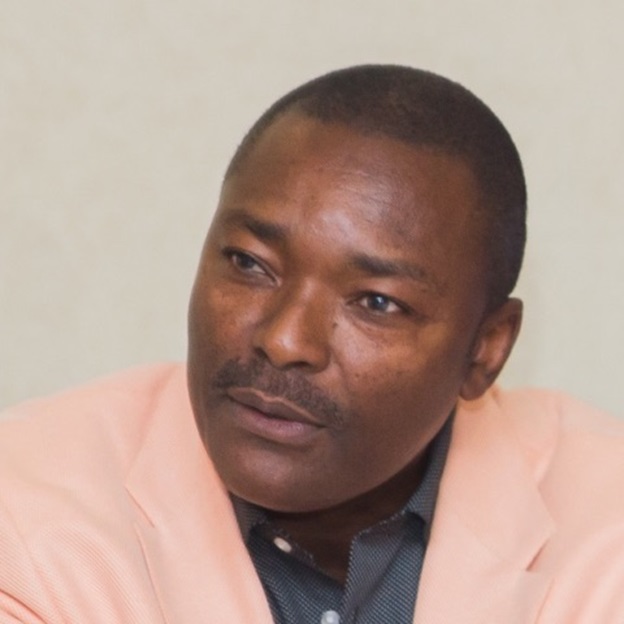



John O. Ifediora, President
Speaking Plainly to the Masses
What if the $148 billion lost annually to corruption across Africa, as reported by the African Union, was instead poured into our children’s classrooms and local clinics? It’s a staggering figure that represents more than just money; it’s a loss of hope and opportunity for millions of families. We know that the heart of a thriving community is trust, yet many feel that governance and economic growth are two parallel lines that never quite meet. You’ve likely felt the frustration of seeing national resources drained by systemic leaks while the private sector remains hesitant to invest in a future that feels uncertain.
We believe that a better way is possible when we work together to build a foundation of integrity. This article shows you how modern anti-corruption frameworks and institutional integrity serve as the primary engines for sustainable economic development across the African continent. We’ll share actionable strategies for institutional capacity building and provide evidence-based arguments for why investing in governance is the smartest move for 2026. By the end, you’ll see exactly how a culture of honesty can attract the $80 billion in annual foreign investment needed to transform our shared home into a land of real, lasting prosperity.
Key Takeaways
- Understand why building strong institutions today is the only way to ensure lasting prosperity for our communities in 2026 and beyond.
- Explore the undeniable link between governance and economic growth and learn how transparent legal frameworks invite the investment needed to build a brighter future.
- Discover how to bridge the gap between passing good laws and seeing real-world results by addressing the bureaucratic hurdles that often stand in the way of progress.
- Learn how digital-first solutions can protect our shared resources by minimizing human gatekeeping and creating a more secure environment for everyone to thrive.
- See how we can work together through expert-led research and policy discourse to create the stable, prosperous Africa that our children deserve.
The Governance-Growth Nexus: Why Institutions Matter in 2026
When we look at a child’s smile, we see a world of untapped potential. That potential only blossoms when the soil is healthy and the environment is safe. In our journey to support families, we’ve learned that the link between governance and economic growth isn’t just a theory found in textbooks; it’s the vital difference between a community that thrives and one that struggles to stay afloat. Governance is the invisible infrastructure that determines the ROI of all other economic activities. It’s the quiet heartbeat of a nation that ensures every dollar spent on a school or a clinic actually reaches the people who need it most.
For decades, many regions followed a “growth-first, governance-later” model. They hoped that rapid wealth creation would eventually fix broken systems. By 2024, data from the World Bank showed this path often leads to inequality and collapse. Without a solid framework of governance, economic gains are like water poured into a leaking bucket. In 2026, we see that true macroeconomic stability only happens when institutions are strong enough to protect the vulnerable and hold the powerful accountable. We can’t build a lasting home on a foundation of sand; we need the transparency and trust that only good institutions provide.
In the current era, attracting Foreign Direct Investment (FDI) has changed. Investors aren’t just looking for low taxes or cheap labor anymore. They’re looking for “institutional certainty.” A 2025 study indicated that FDI flows are 3.2 times higher in countries with clear property rights and independent judiciaries. As we work together to create a better future, we must recognize that good governance is the most effective way to invite the world to invest in our children’s dreams.
The 2026 African Economic Landscape
The year 2026 marks a beautiful turning point for the African Continental Free Trade Area (AfCFTA). This agreement now connects 54 nations, but its heartbeat is the shared commitment to higher standards. Digital transparency is no longer a luxury. It’s a tool that allows 68% of citizens in the region to track public spending through mobile apps. This shift is moving us away from a reliance on raw materials like oil. We’re moving toward a knowledge-based economy where our greatest resource is the creativity and spirit of our people, protected by systems that actually work for everyone.
Rent-Seeking vs. Innovation
When systems are broken, people spend their energy fighting for a piece of the existing pie instead of baking a new one. Poor governance and economic growth don’t go hand in hand because corruption incentivizes lobbying over actual production. This creates a tragic “brain drain.” In 2025, nearly 42% of highly skilled graduates from developing areas sought work abroad because they felt merit didn’t matter at home. We believe in creating a “culture of merit” within every governmental entity. By putting the right people in the right places, we can:
- Reduce waste: Ensure 100% of allocated funds reach community projects.
- Inspire youth: Show our children that hard work and honesty lead to success.
- Foster safety: Create a predictable environment where small businesses can grow without fear.
Together, we can build a world where innovation is rewarded and every individual has the chance to contribute to our collective well-being.
Mechanisms of Integrity: How Good Governance Unlocks Wealth
When we talk about building a better future for our children, we aren’t just dreaming of new roads or taller buildings. We’re talking about the invisible threads of trust that hold a community together. Governance and economic growth are two sides of the same coin; one provides the structure, while the other provides the lifeblood. When a local entrepreneur knows that the law protects their hard work, they feel the confidence to grow. Clear legal frameworks reduce transaction costs by removing the guesswork from daily business deals. This predictability allows a small shop owner to plan for the next year, not just the next day, because they know the rules won’t change overnight.
Judicial independence is the heartbeat of this confidence. If a dispute arises, families need to know they’ll receive a fair hearing regardless of who they know or how much they have in the bank. This fairness is what encourages private sector investment from both local and international partners. When property rights are secure, a family can use their home or land as a bridge to a better life, often serving as the collateral needed for small business expansion. Corruption acts as a hidden tax that disproportionately affects SMEs, siphoning away the very resources meant for a child’s education or a new employee’s salary.
Anti-Corruption as an Economic Multiplier
We’ve seen how systemic integrity transforms lives. In nations where transparency becomes the norm, the results are measurable and heartening. For instance, research on governance and economic growth in Africa shows that even modest improvements in the rule of law lead to significant jumps in per capita GDP over time. By adopting transparent procurement processes, governments can save up to 20% of their national budgets. These aren’t just dry statistics; they represent millions of dollars that can be redirected into healthcare and schools. The CASADE Anti-Corruption Implementation Framework provides a roadmap for these systems, ensuring that every cent serves the people it was meant to help.
The Role of Security in Economic Stability
It’s impossible to plant the seeds of growth in soil that isn’t safe. Economic stability requires a foundation of peace where families don’t fear for their safety when they go to work. We believe that security policy must go hand in hand with development goals to be truly effective. This is the CASADE approach: we look at security not just as a military issue, but as a human one that impacts every market and every household. When a neighborhood is secure, markets stay open longer and children stay in school. You can join these vital conversations at the International Conference on African Security, where we gather to find ways to protect our collective future. Together, we can create an environment where every individual has the chance to thrive in a stable, prosperous home.
Why Technical Solutions Fail Without Institutional Integrity
We often think a new digital tracking system or a shiny piece of legislation will fix everything. It’s a tempting thought, but it’s rarely the reality. In 2023, data from various development projects showed that nearly 70% of public initiatives fail not because the technology was bad, but because the human foundation was cracked. We call this the policy-implementation gap. It’s that painful space where a well-written law sits on a shelf while the community it was meant to protect continues to struggle. When we ignore the heart of the institution, bureaucracy simply swallows the reform whole.
Many reformers fall into the trap of isomorphic mimicry. This is a fancy way of saying they build institutions that look like successful Western models on the outside but don’t actually function on the inside. It’s like building a beautiful house for a family but forgetting to connect the water or the heat. Research highlights the Importance of Good Governance as a living, breathing practice rather than just a set of rules. For governance and economic growth to truly walk hand in hand, we must focus on the people behind the desks. We need empathy and trust. Without a sense of community responsibility, even the most advanced technical solution is just a hollow shell.
The Problem with External Reform Models
For too long, African nations have been handed “copy-paste” solutions from distant experts. These models often ignore the beautiful, complex reality of local life. A 2018 study on anti-corruption efforts found that initiatives succeed 40% more often when they’re rooted in local ownership rather than external pressure. At CASADE, we believe in expert-led, continent-focused solutions. We don’t just bring ideas; we listen to the voices of those who live the reality every day. It’s about creating a safe home for reform that belongs to the people, ensuring that every child sees the benefit of a transparent system.
True progress happens when we stop trying to be someone else and start being the best version of ourselves. We facilitate dialogues that respect local traditions while upholding global standards of integrity. This balance ensures that governance and economic growth aren’t just abstract concepts but tangible realities for the families we serve together.
Building Political Will
Deep structural change requires more than performative gestures or televised speeches. It’s about the quiet, steady work of building integrity within the public sector. Since 2021, we’ve seen that the most effective reforms are those supported by strong civil society groups and professional organizations. These groups act as a warm, watchful eye, holding leaders accountable while offering a helping hand. We need to move away from a culture of blame and toward a culture of shared success.
Incentivizing integrity is a key part of this journey. When a public servant feels valued and secure, they’re less likely to turn toward corruption. We can create systems where honesty is rewarded and transparency is the default setting. It’s about building a future where everyone feels they have a stake in the outcome. Together, we can transform these institutions into pillars of hope that support the weight of our collective dreams.
A Roadmap for Building Growth-Oriented Governance
Creating a path toward prosperity isn’t just about numbers on a ledger; it’s about the people we serve and the communities we build together. To bridge the gap between governance and economic growth, we need a clear, compassionate roadmap. This starts with a deep look at how our institutions function. In 2022, a study by the International Monetary Fund showed that countries improving their governance scores by just one point on a ten-point scale saw a 2% increase in GDP growth over the following decade. We achieve this by moving away from cold, bureaucratic hurdles and toward systems that actually work for families.
Our strategy focuses on five vital pillars:
- Conducting institutional capacity assessments to find where help is needed most.
- Moving to digital-first systems that remove human gatekeepers who might block progress for personal gain.
- Empowering judges and lawmakers to watch over economic policies with integrity and heart.
- Helping our civil servants grow through continuous professional development and emotional support.
- Building open channels where business owners and regulators talk honestly about the challenges they face.
Step 1: Institutional Capacity Building
Capacity building is more than just a weekend workshop or a stack of manuals. It’s the heartbeat of a functional society. We view it as the process of giving our public institutions the tools, heart, and operational speed they need to protect our children’s futures. When a government office runs efficiently, it means a small business gets its permit faster and a family receives support without delay. You can explore how we approach this through the Institutional Capacity Building Programs at CASADE, where we focus on turning official roles into callings of service.
Step 2: Implementing Anti-Corruption Frameworks
Corruption isn’t just a legal issue; it’s a barrier that keeps resources away from the people who need them most. We design structural tools that make transparency the default setting for everyone. By using data-driven policy briefs, we can pinpoint exactly where money goes missing in the system. For example, in 2021, digital procurement systems in several emerging markets reduced financial leakage by up to 15%. This isn’t about policing; it’s about creating a safe, fair environment where every dollar is used to build a better tomorrow for our community. We believe that by working together, we can replace systemic risks with systemic trust.
True progress happens when we stop seeing governance as a series of rules and start seeing it as a way to care for one another. When we invest in the people who run our systems, we’re really investing in the safety and happiness of every home in our nation. We’ve seen that when 80% of a workforce feels empowered and properly trained, productivity doesn’t just rise; the spirit of the whole community lifts. Let’s keep building this future together, ensuring that our governance and economic growth efforts always put the human face first.
Ready to help us build a stronger foundation for our children? Join our mission to strengthen communities today.
CASADE: Empowering Africa Through Security and Development
CASADE isn’t just an organization; it’s a heartbeat for a continent that’s ready to thrive. We believe that every child deserves a safe home and every community needs a foundation of peace to grow. Our mission centers on providing expert-led solutions that pave the way for a stable and prosperous Africa. We understand that the link between governance and economic growth isn’t just a theoretical concept found in textbooks. It’s the tangible difference between a family struggling to survive and a community flourishing with new opportunities. By 2030, Africa will be home to the world’s largest workforce. We’re dedicated to ensuring this generation inherits a continent built on integrity and strength.
Our research reports and the CASADE Journal of African Security serve as vital tools for high-level policy discourse. We don’t just publish data; we tell the story of what’s possible when leadership meets accountability. In 2023, our insights contributed to three major regional policy adjustments regarding maritime security and trade. These aren’t just numbers on a page. They’re blueprints for a future where resources are protected and used for the common good. We bridge the gap between academic research and the practical needs of those on the ground, making sure that every decision is backed by actionable intelligence.
The 2026 International Conference on African Security stands as a major milestone in our journey. This event will act as a catalyst for change, bringing together 500 policymakers, security experts, and community leaders. We’re creating a space where dialogue turns into concrete action. It’s about more than just talking; it’s about building the frameworks that will protect African families for decades to come. We invite you to be part of this movement and help us shape a narrative of hope and resilience.
Our Professional Services
We provide strategic consulting that focuses on anti-corruption and institutional integrity. According to UNCTAD 2020 reports, Africa loses roughly $88.6 billion annually to illicit financial flows. Our team works directly with institutions to plug these leaks and build transparent systems. We’re here to help you access actionable intelligence through CASADE research, giving you the clarity needed to make informed decisions. Partnering with us means you’re investing in continental stability. We offer a helping hand to those who want to build a more secure environment, ensuring that governance and economic growth go hand in hand to create lasting prosperity.
A Collective Future
Everything we do is rooted in the philosophy of “mi” (we) and “együtt” (together). This isn’t a journey we can take alone. It requires the collective will of every stakeholder to foster a culture of accountability. When we work together, we create a loving environment where businesses can grow and children can dream of a better life. Every small step toward transparency is a giant leap for the continent. It’s about giving a chance to those who have been overlooked and building a common future that belongs to everyone.
We believe in the power of community and the strength of shared goals. Our doors are always open to those who want to contribute to a stronger, more secure Africa. Whether you’re a policymaker, an expert, or a concerned citizen, your voice matters in this conversation. Let’s build something beautiful together. We invite you to join the 2026 International Conference on African Security and become an active part of this transformation. Together, we can ensure that the promise of Africa is realized for every person who calls this magnificent continent home.
Building Our Shared African Future
The journey toward 2026 isn’t just about abstract statistics; it’s about the families and children who deserve a stable, flourishing world. We’ve seen that technical fixes often fail when they lack a heartbeat of institutional integrity. True governance and economic growth happen when we prioritize the security of our people over rigid, distant bureaucracy. Since we started in 2012, CASADE has provided 13 years of expert-led policy impact to bridge these critical gaps. We’ve published rigorous, peer-reviewed research in the CASADE Journal of African Security and offered strategic consulting to ensure every institution serves its community with honor. This isn’t a solitary path. It’s a collective mission to build a safe home for everyone across the continent. By choosing transparency today, we’re planting the seeds for a harvest of plenty that our children will enjoy for decades. Your voice is the missing piece in this tapestry of progress. Let’s walk this road together and turn our shared vision into a living reality.
Register for the 2026 International Conference on African Security and join a community dedicated to lasting change. We’re ready to build this beautiful future alongside you.
Frequently Asked Questions
How does governance specifically influence economic growth in Africa?
Governance dictates how a nation’s resources are shared among its families and children to ensure no one is left behind. Research indicates that Africa’s GDP could increase by 2.5% every year if governance standards reached the global average. When we build strong, honest systems, we create a safe home for investment and new ideas. This vital link between governance and economic growth ensures every child has a path to a bright future through stable jobs and reliable public services.
What are the most effective anti-corruption strategies for emerging economies?
Implementing open-contracting portals and protecting whistleblowers are the most effective ways to keep our communities safe from greed. In 2021, countries that used electronic procurement systems saw a 12% reduction in public spending waste. We believe transparency isn’t just a policy; it’s a way to protect the resources meant for our schools and clinics. By digitizing 100% of government tenders, nations can redirect billions toward giving every family the support they deserve.
Can economic growth occur in countries with high levels of corruption?
Economic growth can happen in difficult environments, but it rarely reaches the hands of the families who need it most. Evidence from the World Bank shows that corruption acts as a 20% tax on the poor, siphoning away the funds meant for a child’s education. While a nation’s total wealth might rise, the lack of governance and economic growth synergy means the benefits stay at the top. We believe true prosperity requires an honest foundation where everyone thrives together.
What is the role of institutional capacity building in development?
Institutional capacity building creates the sturdy skeleton of a healthy society by training local leaders and modernizing public tools. A 2022 study found that nations with high-functioning public institutions achieve 3 times more stability in their food supply chains. It’s about giving our community helpers the skills they need to care for their people effectively. When we invest in these capabilities, we’re building a resilient, loving home where the next generation can grow without fear.
How does CASADE support governments in implementing governance reforms?
CASADE supports reforms by providing technical expertise to 15 different African nations to help them draft clear, human-centered policy frameworks. We work hand-in-hand with local leaders to ensure that 100% of our initiatives focus on real-world results for families. Our team doesn’t just offer distant advice; we stand beside these communities to turn blueprints into actual safety and opportunity. It’s our way of ensuring the promise of a better tomorrow becomes a reality for every single person.
What is the link between security, governance, and economic prosperity?
Security and governance are the twin pillars that allow a community to feel safe enough to plant seeds for the future. Data from the 2023 Global Peace Index shows that countries in conflict lose 13% of their potential GDP every year. Without a secure environment, parents can’t plan for their children’s dreams or build a stable home. We believe peace is the soil where prosperity grows, and good governance is the fence that protects it for all of us.
How can digital tools improve transparency in African governance?
Digital tools like blockchain and mobile portals reduce the hidden corners where bribery often hides from the light. In Nigeria, the implementation of a centralized payroll system saved the government $1.5 billion by 2020 by removing fake worker entries. These technologies act as a clear window into how our shared resources are being used to help others. They help us build a culture of trust where every citizen feels seen, heard, and valued by their leaders.
Why is judicial independence critical for economic development?
Judicial independence is critical because it ensures that the law protects the small business owner and the vulnerable family just as much as the powerful. Research shows that countries with independent courts attract 40% more foreign investment than those where politicians interfere with judges. When the law is fair, it creates a safe harbor for everyone to grow their dreams without worry. It’s the ultimate guarantee that our hard work today will lead to a secure future for our children.