




John O. Ifediora
August 2026
Abstract
Female genital circumcision is a procedure entailing the excision of some or all of the external female genitalia. It is a longstanding tradition practiced predominantly in Africa that has, in recent decades, become a highly contested issue within the international community. Rights advocates contend that the practice constitutes gratuitous violence against women in the form of genital mutilation and should be abolished, while cultural relativists counter that female circumcision is a ritual central to cultural identity and therefore lies outside the competence of international bodies shaped by Western liberal sensibilities. This paper examines female genital circumcision as practiced in Africa and evaluates its legitimacy within the framework of the modern human rights regime. The method of inquiry combines a thematic analysis of the practice as it relates to relevant United Nations conventions with an ethnographic approach that seeks meaning through the interpretation of cultural observances.
The thesis advanced here is that female genital circumcision is a dangerous practice that violates accepted precepts of international human rights. Because no single factor fully explains its prevalence, however, any successful challenge to the practice must be multifaceted and attentive to the possibility that enforcing internationally recognized rights may conflict with other important rights, such as those pertaining to religion and cultural autonomy. National governments therefore bear a responsibility to balance these competing considerations carefully against the imperative of protecting fundamental human rights of girls and women.
Prologue
Fauziya Kassindja hailed from a village in northern Togo belonging to the Tchamba-Kunsuntu tribe, whose young women are traditionally circumcised by the age of fifteen in preparation for marriage. Kassindja’s father, an influential figure in the village, shielded her from the practice until his death in 1992. Under tribal custom, his sister assumed responsibility for his children and subsequently forced Kassindja’s mother from the family home. The aunt then arranged a polygamous marriage for the nineteen-year-old Kassindja and, together with her new husband, pressed her to undergo circumcision. Kassindja fled to the United States and petitioned for asylum under the Refugee Act of 1980.
To succeed, Kassindja needed to establish two things: first, that female genital circumcision constitutes “persecution” as defined by the Act — the infliction of pain or suffering by a government, or by a person a government is unwilling or unable to control, in order to overcome a protected characteristic of the victim, and second, that the persecution she feared was directed at an identifiable social group to which she belonged. By narrowly tailoring the statutory elements to the particulars of her case, Kassindja convinced the Board of Immigration Appeals in 1996 that she belonged to a social group of young, uncircumcised women of the Tchamba-Kunsuntu tribe who opposed the practice. Applying the test for a “particular social group” established in an earlier case, the Board held that gender and tribal affiliation are immutable characteristics, and that bodily integrity is so fundamental to a woman’s identity that she cannot be required to alter it (Matter of Kasinga, 21 I. & N. Dec. 357, 365–366 (B.I.A. 1996)). The ruling remains a governing precedent in asylum claims premised on female genital mutilation.
The Kasinga decision ignited debate among scholars, human rights activists, and international agencies such as the World Health Organization. Rights advocates argued that fundamental human rights are universal and transcend local cultural practices that conflict with them. Cultural relativists countered that classifying female circumcision as persecution amounted to a challenge to the cultural autonomy of communities in Africa and the Arabian Peninsula where the practice is observed. The World Health Organization, for its part, characterized the practice as a form of ritualized violence that violates internationally recognized human rights standards.
Introduction
This paper examines female genital circumcision as practiced in Africa and its legitimacy within the framework of the modern human rights regime. The approach combines a thematic analysis of the practice in relation to relevant United Nations conventions with an ethnographic inquiry that approximates what Clifford Geertz termed “thick description,” a method that seeks meaning through the interpretation of cultural observances (Geertz, 1973). The analysis draws on the field research of Janice Boddy in Sudan (Boddy, 1989) and on broader ethnographic and legal literature.
At the center of this inquiry lies the tension between human rights advocates, who maintain that human rights are universal and may not be attenuated to accommodate cultural particularity, and cultural relativists, who argue that imposing a universal standard of rights marginalizes the cultures of indigenous groups. Embedded within this tension is the practice of female genital excision, referred to by abolitionists as female genital mutilation (FGM). The thesis of this paper is that female circumcision is an unnecessary and dangerous alteration of the body that violates accepted precepts of international human rights.
The sections that follow discuss the practice and its prevalence, the health risks associated with it, and the populations most likely to engage in it; analyze how the practice conflicts with the norms of the modern human rights regime; and briefly examine the debate between universal human rights and cultural relativism. The paper concludes with recommendations for curbing the practice.
Practice and Prevalence
Female circumcision is an old tradition observed in at least twenty-eight countries across Africa and parts of Asia, generally performed to prepare young girls for womanhood and marriage. In recent decades the practice has also appeared within immigrant communities in North America and Europe. Prior to the introduction of Western medicine, circumcisions were performed without effective anesthesia and under septic conditions; in regions where the practice persists, this often remains the case, frequently carried out by practitioners without formal medical training. The rationale commonly cited by practitioners includes hygiene, the promotion of fertility, and the discouragement of promiscuity. Girls are typically subjected to the procedure between the ages of five months and ten years. As access to formal education expanded, however, the practice became increasingly uncommon among the middle class by the mid-1960s, and by the 1970s it was confined largely to rural and peasant communities.
While practices vary considerably, three basic forms of female circumcision are generally recognized. The first is a clitoridectomy, involving the partial or total removal of the clitoris. The second is excision, involving removal of the clitoris and the labia minora. The third and most severe form, infibulation, involves excision of the clitoris and labia minora together with cutting of the labia majora, which are then stitched together; the legs are bound until the wound heals, leaving scar tissue that covers most of the vaginal opening except for a small aperture for the passage of urine and menstrual blood.
In her ethnographic account of the Sudanese village she calls “Hofriyat,” Janice Boddy distinguishes pharaonic circumcision, the most extensive form, involving excision and infibulation, from the male procedure, which more closely resembles a simple removal of the foreskin (Boddy, 1989, pp. 51–55). Boddy reports that a less severe operation known locally as sunna circumcision, involving removal only of the clitoral hood, was gaining acceptance in Khartoum even as women continued to favor the more extensive procedure on aesthetic and hygienic grounds; several of her informants expressed a preference for what they described as a “dignified closure” over an “ugly opening” (Boddy, 1989, p. 55). Boddy further notes that women in Hofriyat avoided being photographed laughing, since bodily orifices, and particularly those of women, were considered most appropriate when closed or minimized.
Survivors of infibulation often experience chronic pain from damaged nerve endings and remain vulnerable to recurrent urinary tract infections. Because many women are reinfibulated after each birth, the vaginal opening tends to narrow progressively over time, increasing the risk of menstrual blockage, urethral obstruction, and compromised fertility. Boddy’s informants described a young bride’s simultaneous anticipation of and dread toward her wedding, given the difficulty, sometimes requiring up to two years of sustained effort, of achieving penetration after radical circumcision; many women reported avoiding sexual relations except when attempting to conceive, and childbirth itself required a midwife both to cut the scar tissue to release the infant and to reinfibulate the mother afterward (Boddy, 1989, pp. 55–56).
Notwithstanding these risks, practitioners generally regard the practice as an integral part of their culture and ethnic identity. Geertz’s interpretive anthropology offers a useful frame for understanding such practices: culture, in his formulation, is best understood as a system of meaning that must be approached from the perspective of its participants, even as any outside interpretation remains, inevitably, an interpretation of the natives’ own interpretation (Geertz, 1973).
Rationale for Female Circumcision and Unresolved Tensions
Anthropological and ethnographic studies identify a recurring set of justifications offered by practitioners across the twenty-eight African countries where the practice persists: compliance with perceived religious precepts, preservation of ethnic and group identity, the promotion of hygiene, the protection of family honor through the prevention of sexual promiscuity, and preparation for womanhood and marriage.
In communities where religious belief is cited as the principal motivation, Islam is typically the predominant faith, although the Qur’an contains no explicit mandate for the practice. While the Qur’an commends chastity as a moral value, it does not prescribe circumcision as the means of achieving it. Notably, female circumcision is not customary in Saudi Arabia, generally regarded as the geographic and spiritual center of Islam; some researchers trace the earliest evidence of the practice to pre-Islamic Egypt, suggesting pharaonic rather than Islamic origins (Gruenbaum, 2001, pp. 21–23).
For practitioners in Nigeria and Togo, the preservation of ethnic identity and the prevention of premarital sexual activity often figure more prominently than religious rationale. In many such communities, social status and marital eligibility are closely tied to the ritual, and heightened social standing follows the completion of circumcision. Adherence to custom itself carries independent weight, as reflected in the widely cited sentiment of one Somali woman, who likened abandoning the tradition to defying divine will.
A persistent and contentious dimension of this debate is the charge that Western critics approach the issue from an ethnocentric and colonial vantage point, implying that meaningful change can originate only from external intervention. Feminists engaged in the debate face a related dilemma: the practice is conducted principally by women, and the injuries associated with it are inflicted by women upon other women, complicating any straightforward narrative of patriarchal imposition. Ellen Gruenbaum addresses this complexity through what she terms a “contested culture” approach, which highlights internal disagreement within practicing societies across lines of class, gender, and generation (Gruenbaum, 2001).
Gruenbaum disputes the common assumption that female circumcision functions primarily to suppress women’s sexuality, arguing on the basis of her fieldwork that the sexuality of circumcised Sudanese women is neither destroyed nor left unaffected, and that circumcision does not eliminate sexual satisfaction altogether (Gruenbaum, 2001). She further reports that Sudanese women she interviewed generally recalled their own circumcision vividly but did not dwell on the associated pain or fear. Gruenbaum identifies the procedure’s function as an ethnic and social marker, with more severe forms sometimes correlating with higher social status, and concludes that marriageability remains the most frequently cited justification, particularly in settings where marriage constitutes one of the few available routes to social standing (Gruenbaum, 2001).
The debate also implicates the right of parents to raise children according to inherited custom. A parent who subscribes to the practice may sincerely believe that a daughter’s welfare would be harmed by remaining uncircumcised, and may experience guilt at the prospect of failing a parental duty; from this vantage the practice appears as a benefit conferred on the child rather than a harm inflicted upon her. Because children are generally presumed incapable of giving informed consent to decisions affecting their welfare, however, rights advocates argue that circumcision performed on a minor cannot reflect the child’s free will and therefore constitutes a form of child abuse and a violation of guaranteed human rights. This produces a direct conflict between the right of parents to transmit customary practice and the right of the child to be free from potentially harmful treatment.
Consent is similarly complicated in the case of adult women. Social conditioning, peer pressure, and the practical consequences of remaining unmarried exert powerful influence over an adult woman’s decision to undergo circumcision, such that meaningful free choice is difficult to establish even where the procedure is performed on an ostensibly voluntary basis. Because no single factor fully accounts for the practice and its prevalence, any successful challenge to it must be multifaceted, and must remain attentive to the possibility that enforcing internationally recognized human rights could come into tension with other important rights, including those pertaining to religion and cultural minorities.
Human Rights Implications of Female Genital Circumcision
The justifications offered by practitioners in Nigeria, Sudan, and elsewhere are remarkably consistent, generally invoking purity, fertility, or chastity. Had the procedure not involved severe pain bordering on inhumane treatment, it might have escaped the notice of human rights advocates altogether; had the associated health risks been marginal relative to the claimed benefits, it might similarly have remained outside the concern of international women’s organizations. Neither condition holds. With the possible exception of chastity, the presumed benefits of the practice do not withstand scrutiny: circumcision cannot be shown to increase fertility, since uncircumcised women are demonstrably just as fertile. The claims of purity and fertility may instead obscure a more fundamental function, in patrilineal and patriarchal societies, the practice has served as a further means of exerting control over women, particularly through the most severe form, infibulation, and its repetition after childbirth. Boddy’s Sudanese informants themselves emphasized the preservation of chastity and family honor as the most persuasive rationale for infibulation, tied closely to the broader cultural association between a family’s dignity and the conduct of its women (Boddy, 1989, pp. 46–51).
Viewed through the lens of the modern human rights regime, female genital circumcision appears difficult to reconcile with prevailing doctrine, hence the designation, adopted by rights advocates, of “female genital mutilation” (FGM). Beginning with the 1948 Universal Declaration of Human Rights, feminists and rights advocates have sought the elimination of the practice. African medical practitioners and activists raised concerns about its health consequences with international bodies such as the World Health Organization and the United Nations as early as the 1950s, though a formal policy statement did not emerge until an international seminar held in Khartoum in 1979, which recommended that governments act to eliminate female circumcision.
In 1984, African women’s organizations convened in Dakar, Senegal, resulting in the formation of the Inter-African Committee on Traditional Practices Affecting the Health of Women and Children (IAC), whose purpose was to draw African governments’ attention to the harmful effects of female circumcision. These efforts contributed to the adoption of instruments such as the Convention on the Elimination of All Forms of Discrimination Against Women and the Convention on the Rights of the Child (1989). Article 19 of the Convention on the Rights of the Child obligates states parties to take all appropriate legislative, administrative, social, and educational measures to protect children from all forms of physical or mental violence, injury, abuse, neglect, or maltreatment while in the care of a parent, guardian, or other caregiver (UN General Assembly, 1989, art. 19). Article 24(3) further directs states parties to take all appropriate measures to abolish traditional practices prejudicial to the health of children (UN General Assembly, 1989, art. 24(3), a provision widely understood by rights advocates to reference FGM specifically.
The African Charter on the Rights and Welfare of the Child similarly commits states parties to abolish customs and practices harmful to the welfare, growth, and development of the child, including those prejudicial to health or life and those that discriminate against children on the basis of sex (Organization of African Unity, 1990, art. 21(1)). The 1994 International Conference on Population and Development in Cairo marked the first occasion on which a major international body explicitly used the term “female circumcision” in its declarations, characterizing it as a violation of basic rights and calling on governments to prohibit the practice. The following year, the Fourth World Conference on Women in Beijing likewise declared the practice a violation of women’s rights and a serious threat to reproductive health.
Universal Human Rights and Cultural Relativism
Modern human rights advocacy, notwithstanding its considerable successes, continues to be challenged by the absence of a fully settled theoretical foundation capable of commanding both universal appeal and universal acceptance. Critics and sympathetic commentators alike raise two principal objections: first, that the concept of universal human rights rests on Western democratic ideals of individual liberty and is therefore inappropriately hegemonic and disrespectful of other cultures; and second, that the foundational premise of human dignity on which rights claims rest cannot be justified except on religious grounds. The first objection, advanced most forcefully by cultural relativists, remains the more influential of the two and continues to command significant support in both developed and developing nations.
The position advanced in this paper is that female genital circumcision, as practiced in many African countries, constitutes a violation of rights when assessed within the framework of the modern human rights regime. This position rests on the premise that certain human rights are primary and fundamental and may not be derogated from regardless of the society or culture in which they first gained prominence; once such rights attain near-universal acceptance in law or practice, no further ontological justification is required for their existence. Other, secondary rights, by contrast, may require considerable time to become adapted to domestic practice and may never achieve acceptance in any single, universally uniform form.
Human Rights and Cultural Relativism
At its core, the purpose of human rights is to confer upon individuals a degree of dignity sufficient to enable the free exercise of will, meaningful relationships, freedom from harm, and the pursuit of personal welfare without subjection to physical or spiritual domination. This conception of dignity draws on a moral foundation and reflects the idea of human rights as equal and inalienable entitlements that ground powerful claims against the state, held by each person simply by virtue of being human (Donnelly, 2013). These ideals are, however, unmistakably liberal and Western in origin, owing an intellectual debt to the American Declaration of Independence (1776) and the French Declaration of the Rights of Man and of the Citizen (1789), documents that shaped the political thought of nineteenth- and twentieth-century liberalism. The modern human rights regime may reasonably be characterized as an attempt to universalize this liberal conception of rights, a characterization borne out by the language of the Universal Declaration of Human Rights itself, which affirms faith in fundamental human rights, the dignity and worth of the human person, and the equal rights of men and women as a common standard of achievement for all peoples and nations (UN General Assembly, 1948, preamble).
Some human rights undeniably require supporting legal and social institutions to be meaningful and effective, and states lacking such institutions — whether post-Soviet states or states across Africa, Asia, and Latin America, may find rights claims difficult to operationalize in the near term. This institutional deficit, however, does not render such states undeserving of the benefits of human rights; if anything, it is precisely in these contexts that human rights law can yield the most significant immediate benefits and establish long-term conditions for social and economic development. Fernando Tesón argues that it is entirely legitimate for a Western commentator to advocate universal human rights and to discuss their protection worldwide, since human rights concern the protection of life, safety, and individual freedom, values that most people, when deprived of them, wish to possess regardless of the culture in which they live (Tesón, 1985, pp. 869–898). The point worth emphasizing is that certain human rights are primary and fundamental, such that their value remains universal irrespective of their geographic or cultural point of origin. Donnelly locates the source of these rights in the moral nature of the human person: human rights, on this view, are necessary not merely for life but for a life of dignity befitting a human being, and arise from the inherent dignity of the person (Donnelly, 2013).
This justification, though persuasive to those with liberal sensibilities, continues to face substantial challenges grounded in claims of group rights, national sovereignty, and cultural or religious autonomy. These challenges collectively underscore the philosophical doctrine of cultural relativism, which holds that outside actors should refrain from interfering in purely domestic matters, a position rooted in the norm of state sovereignty and in the premise that only members of a given culture are equipped to resolve its internal problems. In its fullest form, cultural relativism supports the claim that a particular articulation of human rights, even among the most basic rights, may be incompatible with the cultural observances of other societies and therefore unacceptable to them.
Cultural relativists generally accept that the underlying notion of rights may be universal while insisting that the specific articulation and practice of rights properly varies, and ought to vary, across cultures; every society, on this view, holds its own conception of ideal human rights, one that need not correspond to conceptions prevailing in Western democracies or codified by the United Nations. This position finds forceful expression in the argument that civil and political rights carry limited meaning for societies that have not experienced sustained peace, stability, or development since their encounter with Western imperialism. The core of the present debate, then, lies between rights advocates, who hold that human rights are universal and that all cultures are ultimately capable of accommodating the liberal conception of rights, and cultural relativists, who regard the universalization of that conception as tantamount to Western hegemony and the delegitimization of other cultures. Both positions contain compelling elements, yet both arguably obscure the central issue by failing to identify the proper source of human rights.
A Distinction Between Natural Law and Positive Law
Discussions of human rights typically invoke two distinct bodies of law: positive law and natural law. Positive law comprises the rules enacted by particular jurisdictions and enforced through police and judicial institutions; such rules bind only the citizens of the enacting jurisdiction and do not, properly speaking, constitute human rights. A citizen of the United States may invoke the Bill of Rights as a basis for legal claims, but citizens of jurisdictions lacking comparable enforceable constitutional guarantees have no equivalent recourse to positive law. A different legal foundation is therefore required to sustain the concept of universal rights.
Natural law, by contrast, supplies a set of general moral standards on which claims, immunities, and liberties may rest without regard to jurisdictional boundaries. Because these standards must be universal and independent of culture, religion, and nationality, it follows that some version of natural law must underlie any coherent claim to universal human rights: if human beings possess rights by virtue of their humanity, there must exist a general moral standard, however variously understood or expressed, that commands universal acceptance. This is the principal advantage natural law offers over positive law as a foundation for human rights.
Conclusion
In 1998 the World Health Organization estimated that approximately two million girls and women undergo circumcision each year. A Kenyan government study found that more than 80 percent of circumcised women experienced at least one serious medical complication as a result of the procedure, and other national studies have found that between 15 and 30 percent of girls who undergo circumcision die from resulting infection or hemorrhage. The central purpose of human rights, to confer on individuals the dignity necessary for the free exercise of will, for meaningful relationships, for freedom from harm, and for the pursuit of personal welfare free from physical or spiritual domination, remains the appropriate standard against which the practice must be measured.
Since 1948, rights advocates have consistently maintained that human rights are universal and that all cultures are ultimately capable of accommodating a liberal conception of those rights. Cultural relativists have argued with equal consistency that universalizing this conception amounts to Western hegemony and risks delegitimizing other cultures, and that societies should be permitted to define and promulgate rights within the bounds their own cultures allow. Both positions carry genuine force, and some accommodation between them will be necessary if the international community is to achieve a coherent and consistent observance of rights.
Female genital circumcision sits squarely within this debate and illustrates the difficulties rights advocates must overcome in seeking to universalize basic human rights. Certain rights — security of the person and freedom from civil, political, and religious subjugation among them — warrant recognition as jus cogens norms regardless of domestic cultural observance. Given its considerable risk of physical harm, female circumcision should be strongly discouraged; at the same time, because the practice reflects a powerful tradition embedded in much of Africa and in certain religious observances, efforts to curb it must proceed with sensitivity to the cultural and religious commitments of the communities concerned.
A useful starting point is the engagement of national governments in countries where the practice remains prevalent, since such governments possess both the incentives and the enforcement capacity to advance reform; coercive sanction, however, should function as a last resort rather than a first response. Sustained education directed at the relevant populations — including traditional and spiritual leaders — concerning the health risks of the practice offers a more promising path, potentially supplemented by alternative rituals that satisfy the same social functions the practice is understood to serve. Criminal sanction alone is unlikely to succeed, since it does not address the underlying social reasons for the practice; absent such engagement, the practice is likely to continue out of public view even where severe penalties exist.
While the ideals underlying the modern human rights regime are unmistakably Western and liberal in origin, their substantive value is not confined to societies that share that heritage. The fact that individual rights and freedoms were first comprehensively articulated by Western societies does not render them objectionable to other cultures, so long as experience demonstrates their benefit to individual welfare and social progress — much as the Western origin of powered flight has not led other societies to reject air travel, nor has the Western origin of modern medicine led to its wholesale rejection elsewhere. Lightfoot-Klein observes that childhood genital modification, whether practiced on girls in parts of Africa or performed routinely on boys in the United States, is typically justified in strikingly similar terms, invoking cleanliness, the absence of odor, and enhanced attractiveness, with those affected in both traditions generally coming to regard the procedure as something done for their benefit rather than something done to them (Lightfoot-Klein, 1989).
Like other deeply rooted rituals, female circumcision persists because it retains presumed social or religious relevance for its practitioners; once so convinced, communities require little further justification for its continuation, and the practice is likely to persist until its perceived usefulness is exhausted or a less harmful alternative ritual takes its place. Curbing the practice will require sustained effort to expose its harmful effects to those subjected to it as a matter of course rather than free choice, together with a policy that either abandons the practice altogether or reserves it, at most, for adults who freely elect it upon reaching the age of consent. Further research into viable alternative rituals capable of serving the same social ends would meaningfully advance this effort.
References
African Charter on the Rights and Welfare of the Child, Organization of African Unity, art. 21(1) (adopted July 11, 1990, entered into force Nov. 29, 1999).
Boddy, J. (1989). Wombs and alien spirits: Women, men, and the zar cult in northern Sudan. University of Wisconsin Press.
Convention on the Rights of the Child, Nov. 20, 1989, 1577 U.N.T.S. 3, arts. 19, 24(3).
Donnelly, J. (2013). Universal human rights in theory and practice (3rd ed.). Cornell University Press.
Geertz, C. (1973). The interpretation of cultures: Selected essays. Basic Books.
Gruenbaum, E. (2001). The female circumcision controversy: An anthropological perspective. University of Pennsylvania Press.
Ifediora, John O. (2007). Female Genital Circumcision and International Human Rights: A Clash of Cultures. EconPapers, RePEc. No. 27843, Munich University.
Lightfoot-Klein, H. (1989). Prisoners of ritual: An odyssey into female genital circumcision in Africa. Haworth Press.
Matter of Kasinga, 21 I. & N. Dec. 357 (B.I.A. 1996).
Tesón, F. R. (1985). International human rights and cultural relativism. Virginia Journal of International Law, 25(4), 869–898.
United Nations General Assembly. (1948). Universal Declaration of Human Rights, G.A. Res. 217A (III).
United Nations, International Conference on Population and Development. (1994). Programme of Action. Cairo, Egypt.
United Nations, Fourth World Conference on Women. (1995). Beijing Declaration and Platform for Action. Beijing, China.
World Health Organization. (1998). Female genital mutilation: An overview. WHO.
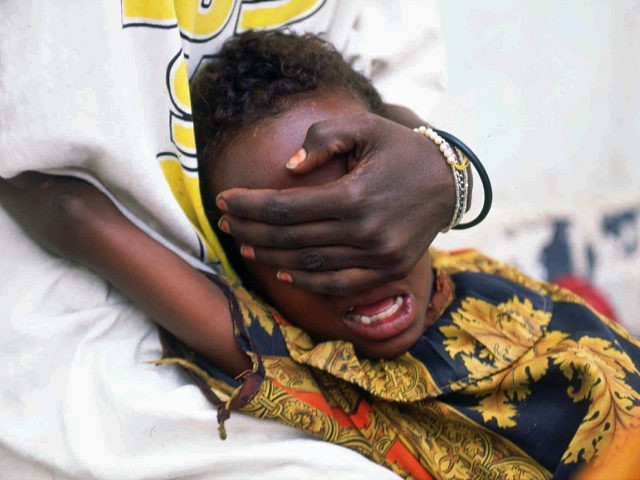
*Photos courtesy: Jean-Mark Banjul/AP